
The Claim and the Controversy
For about a decade, the "bilingual advantage" was a celebrated finding in cognitive psychology. The claim: people who speak two languages show superior performance on executive function tasks, particularly task-switching, inhibitory control, and cognitive flexibility, compared to monolinguals. The proposed mechanism was that constantly managing two language systems exercises the inhibitory control networks that underpin these functions.
The researcher most associated with the claim is Ellen Bialystok at York University in Toronto, who published influential studies from the early 2000s onward. Her Stroop task experiments showed that bilingual adults were faster to suppress distracting information than monolingual controls, suggesting the constant practice of keeping two languages from interfering with each other had generalised to domain-general inhibitory control. The work was widely covered in the press and cited in educational policy discussions about the cognitive benefits of multilingual education.
The finding was intuitive, widely cited, and had significant policy implications. Then large-scale replications began failing to find the effect. By the mid-2010s, it had become one of the most contested findings in the field. What followed was a genuine scientific debate that is still ongoing, and more interesting than either the original claim or its dismissal.
The publication bias problem was documented formally by Angela de Bruin and colleagues at the University of Edinburgh in a 2015 analysis. They found that conference abstracts reporting null results were significantly less likely to be submitted or accepted for publication than those reporting positive effects, the standard publication bias mechanism. Kenneth Paap at San Francisco State University conducted multiple independent replication attempts across different samples and tasks and consistently failed to find reliable executive function advantages in bilinguals. Paap's conclusion was direct: the general bilingual advantage, as a phenomenon that holds across tasks and populations, probably does not exist.
Why the Original Studies Were Likely Real
The original bilingual advantage studies were not fabricated or trivially flawed. They likely captured a real effect under specific conditions that later, broader studies did not match:
- Active bilinguals who used both languages daily, in demanding switching contexts
- Older adult populations, where the advantage may protect against age-related executive function decline
- Immigrant populations, who may differ from monolinguals in ways beyond language use
- Specific task types that map closely onto the cognitive demands of real-time language switching
The broader replication attempts often used university student samples who were weakly bilingual and compared them to monolinguals in the same population, a comparison less likely to reveal the effect.
+4.5 yr
Average delay in Alzheimer's symptom onset in lifelong bilinguals, one of the more robust findings in the literature
Discover Your IQ Score
Free 36-question assessment. Instant results. No sign-up required.
Take the Free IQ Test →What the Evidence Does Support
Once the dust settled, the field converged on a more qualified position. There is consistent, well-replicated evidence that:
Lifelong active bilingualism may delay dementia onset. This is one of the more robust positive findings. The key study is Craik, Bialystok, and Freedman (2010), which analyzed 228 consecutive Alzheimer's patients at Baycrest hospital in Toronto. Lifelong bilinguals were diagnosed an average of 4.3 years later than monolinguals despite having equivalent cognitive and neurological severity at the time of diagnosis, meaning the disease had progressed further before their symptoms became clinically apparent. The same direction of effect has been replicated in cohorts in India, Spain, and Italy. The proposed mechanism is cognitive reserve: a lifetime of language management builds a buffer of functional capacity that delays the point at which neurological damage becomes symptomatically visible.
Language learning itself is cognitively demanding. The process of acquiring a second language to functional fluency requires extensive working memory use, pattern recognition, and executive control. That engagement may have benefits regardless of whether a permanent structural advantage remains.
The advantage, if it exists, is domain-specific. Bilingualism does not raise general IQ. It may improve specific executive functions, particularly those related to managing competing representations, without affecting verbal reasoning, fluid intelligence, or memory more broadly.
Does This Mean You Should Not Learn a Language?
No. The cognitive reserve argument for language learning remains solid. The intrinsic cognitive demands of language acquisition are worthwhile independent of the advantage debate. And the social, professional, and cultural benefits of bilingualism are entirely real.
The more honest framing is that learning a second language is cognitively beneficial, but probably not a "make you smarter" intervention in the raw IQ sense. It is an enrichment with real cognitive benefits that are more nuanced than the original headline suggested.
The Broader Lesson
The bilingual advantage debate is a useful case study in how cognitive science works. A plausible, intuitive finding gains widespread acceptance, fails broader replication, gets investigated more carefully, and eventually yields a more textured truth: the effect is real but conditional, smaller than initially reported, and domain-specific rather than general. That is how the field is supposed to work, even when it is uncomfortable for the original narrative.

AJ Dorey
Founder, IQScore
AJ Dorey is an English software developer who researches and writes about intelligence and cognition. He built IQScore because most online IQ tests are broken — they either inflate scores to keep people happy or bury results behind a paywall after 20 minutes of questions.
Further Reading
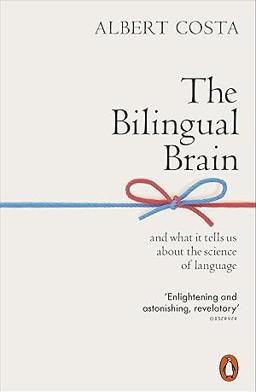
The Bilingual Brain
Albert Costa
The Bilingual Brain is a clear-eyed look at what speaking two languages actually does, and doesn't do, to cognition. Based on decades of research, it gives a far more nuanced picture than either the optimists or sceptics usually offer.
Curious where you actually rank?
Free IQ test · 36 questions · Instant results · No sign-up
Start Free IQ Test →Already know your score? Convert it to a percentile →