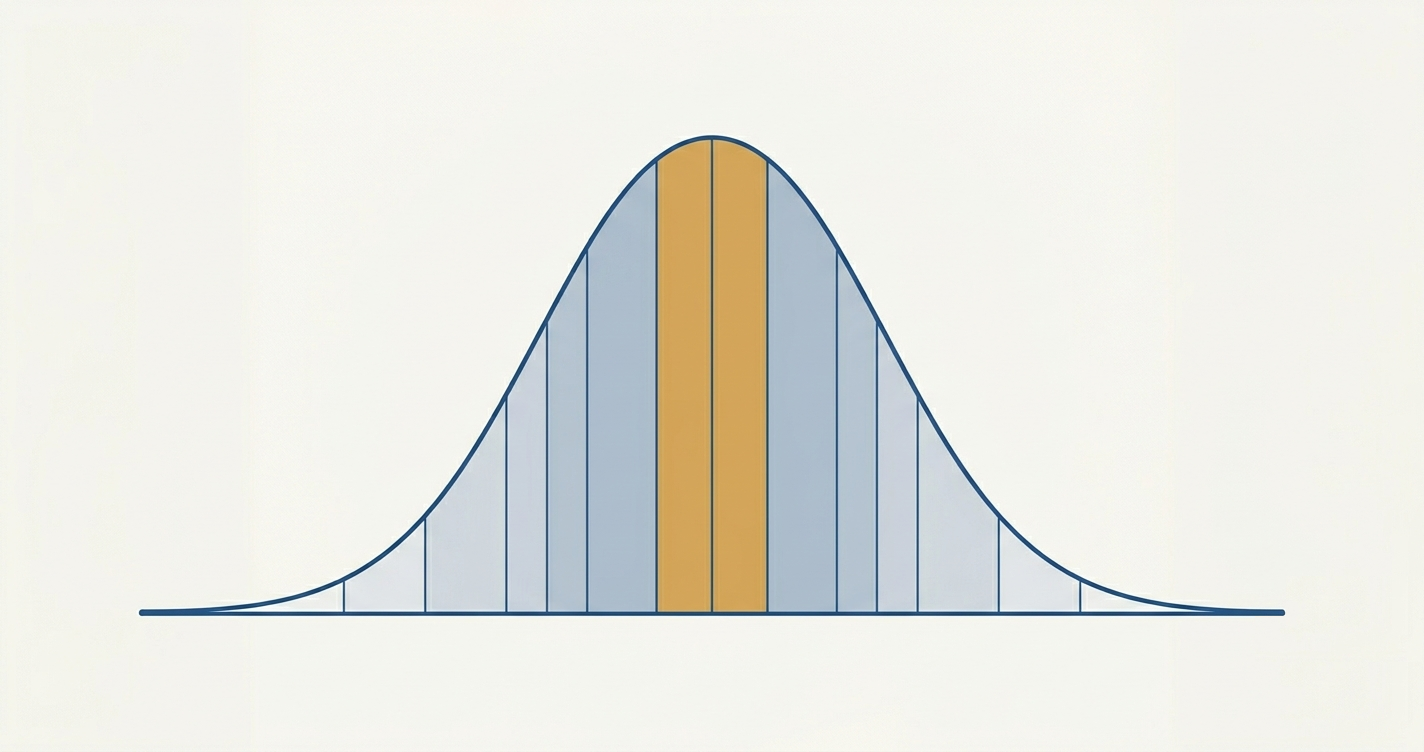
Breaking Down Each IQ Score Range
Most people know their IQ score is somewhere between 90 and 130. What most people don't know is what that actually means, or how different those two ends of the range really are in practice.
This guide covers every recognised IQ band, drawing on the classification systems used in the Wechsler Adult Intelligence Scale, the most widely used IQ test in clinical settings. If you want to understand what a "good" score looks like before diving into the ranges, start with our guide on what a good IQ score means.
How the Bell Curve Is Built, and Why 100 Is Always Average
Every IQ test is designed to produce scores following a normal distribution with a mean of 100 and a standard deviation of 15. This is a deliberate calibration, not an empirical finding. When you receive your score, you are being told where you stand relative to the general population, not how many raw points you earned.
Scores 130 and Above: Very Superior
The top 2.2% of the population lands here, the threshold for Mensa membership and most gifted designations in educational settings. Individuals in this range typically show exceptional capacity for abstract reasoning, rapid learning, and identifying patterns others miss entirely.
Within this range, gradations matter. Scores of 145 and above represent fewer than 0.1% of the population. Standard tests are normed on the general population, and their discriminant validity at the extreme upper tail is limited. Claims of IQs above 160 on standard assessments deserve genuine scepticism, the measurement precision required to distinguish those scores reliably simply does not exist in instruments designed for the general population.
Scores 120–129: Superior
The Superior range encompasses roughly the top 9% of the population, where most elite university students cluster, and where high performance in demanding professional fields (law, medicine, engineering, finance) becomes consistent rather than exceptional.
Research on occupational performance suggests the practical difference between a score of 105 and 120 may be more significant than the difference between 120 and 135, particularly in day-to-day professional contexts where social skills, domain knowledge, and judgment interact with raw reasoning ability.
Scores 110–119: High Average
High Average is arguably the most practically advantageous cognitive position for careers requiring both intellectual capability and effective social functioning. Clearly above the median and capable of demanding intellectual work, but not so far outside typical cognitive range as to encounter the interpersonal friction sometimes associated with extreme outliers.
Research consistently shows that High Average individuals achieve strong career outcomes across a wide range of fields, often outperforming higher-scoring counterparts in applied settings through superior persistence and social adaptation.
Roughly the 75th to 90th percentile. Strong academic performance, leadership capacity, and effective functioning across most professional environments. Scoring here combined with high conscientiousness and deep domain knowledge represents a near-optimal cognitive profile for most ambitious careers.
Find out which band you're actually in
36 questions. Instant score with percentile ranking and a full cognitive domain breakdown. No sign-up required.
Take the Free IQ Test →Scores 90–109: Average
The Average range contains approximately 50% of the entire population. Cognitively typical is the accurate description, and there is nothing pejorative about that. The bell curve is widest here by design, and most of the world's productive work gets done by people in this range.
Average scorers perform well across a wide variety of occupations and academic settings. Challenges arise primarily in highly technical fields demanding rapid abstract reasoning, or in academic contexts that specifically reward the narrow skills IQ tests measure. Most of life's important endeavours are achievable here with effort, experience, and sound judgment.
Scores 80–89: Low Average
Low Average sits roughly at the 9th to 24th percentile, below the median but still within the normal range and not a clinical designation. Individuals here may find traditional academic environments more demanding, particularly in abstract subjects like mathematics and theoretical sciences.
Skilled trades, practical professions, and careers that reward experience, judgment, and interpersonal skill over abstract reasoning are entirely accessible here. The IQ test's focus on abstract decontextualised reasoning genuinely does not capture the full range of cognitive competence relevant to most occupations.
Scores 70–79: Borderline
The Borderline range sits roughly at the 2nd to 8th percentile, at the boundary between typical cognitive functioning and what clinicians classify as intellectual disability. A score here alone is insufficient for any clinical designation, adaptive functioning assessments are required before any such classification can properly be made.
Many individuals in this range live fully independent lives, hold steady employment, and maintain healthy relationships. Primary challenges manifest in formal educational settings, not necessarily in the practical domains of everyday life.
Scores Below 70: Intellectual Disability
Scores below 70, combined with significant deficits in adaptive functioning, meet the diagnostic criteria for intellectual disability under DSM-5 and ICD-11. Within this category: mild (55–69), moderate (40–54), severe (25–39), and profound (below 25).
A single test score should never drive this determination. Standardised assessments can be suppressed by test anxiety, unfamiliarity with the testing format, language barriers, and cultural factors unrelated to cognitive ability. Proper assessment requires multiple measures and clinical judgment from a qualified practitioner.
6 Factors That Can Artificially Depress Your Score
Any honest account of IQ ranges must address the factors that produce scores lower than a person's actual cognitive capacity. These are real and common, not edge cases.
- Test anxiety. Timed assessments are acutely sensitive to anxiety. Even mild performance anxiety measurably impairs working memory and processing speed, the exact abilities IQ tests measure most heavily.
- Poor sleep or illness. A single night of poor sleep can shift scores by five to ten points. Illness, chronic fatigue, or taking a test while unwell produces results that represent your depleted state, not your baseline ability.
- Cultural and linguistic bias. IQ tests are designed and normed for specific populations. If the test was built around Western educational contexts and you grew up elsewhere, the test may be measuring familiarity with that context as much as raw cognitive capacity.
- Unfamiliarity with abstract reasoning formats. Western schooling emphasises decontextualised abstract tasks, exactly what IQ tests demand. Populations without heavy exposure to this format are structurally disadvantaged regardless of their actual cognitive ability.
- Low motivation or lack of effort. Not taking the test seriously, rushing to reach the results, or treating it as a game will produce a score that reflects your effort level, not your ability. First-attempt scores taken under genuine conditions are substantially more reliable.
- Distracting or uncontrolled testing conditions. Noise, interruptions, technical issues, or sitting the test on a phone while multitasking introduce variance that suppresses performance. Controlled conditions are not optional for accurate results.
Online IQ tests, including this one, should be understood as estimates rather than definitive clinical assessments. The APA's research on intelligence and psychological assessment sets out the standards that distinguish clinical from informal measurement.
5 Things IQ Ranges Cannot Tell You
IQ score ranges are useful shorthand for cognitive ability. But there is a long list of things they genuinely cannot predict:
- Creativity. Many of the most celebrated artists, writers, musicians, and entrepreneurs score in the average range. Creative output depends on openness, domain knowledge, and practice, not fluid reasoning scores.
- Emotional intelligence. Understanding and managing relationships, reading social dynamics, and navigating interpersonal complexity are entirely separate cognitive systems from those IQ tests measure.
- Practical wisdom. Judgment developed through lived experience, knowing which problems are worth solving, and the ability to act effectively under uncertainty, none of this shows up in a timed reasoning test.
- Character and drive. Conscientiousness, persistence, and intrinsic motivation are better predictors of long-term achievement than IQ in most real-world domains. High scorers who coast consistently underperform lower scorers who work harder.
- Your ceiling. The score reflects your current cognitive performance, under your current conditions, shaped by your education and environment. It says nothing about where you could go with different inputs, and the Flynn Effect proves those inputs matter enormously.
IQ ranges give you a map, not a verdict. They tell you where your cognitive performance sits right now. They say nothing about where you could go. Take the free IQScore IQ test to find out exactly where you currently sit, then decide what to do with the information.

AJ Dorey
Founder, IQScore
AJ Dorey is an English software developer who researches and writes about intelligence and cognition. He built IQScore because most online IQ tests are broken — they either inflate scores to keep people happy or bury results behind a paywall after 20 minutes of questions.
Further Reading
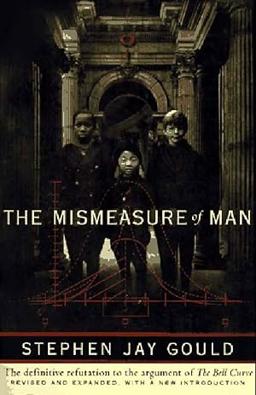
The Mismeasure of Man
Stephen Jay Gould
The Mismeasure of Man is a critical history of how IQ testing has been constructed, deployed, and misused. Gould's specific claims are contested by some researchers, but it's essential background for anyone who wants to think seriously about what these ranges actually measure.
Curious where you actually rank?
Free IQ test · 36 questions · Instant results · No sign-up
Start Free IQ Test →Already know your score? Convert it to a percentile →