
Brain Training Is a $1 Billion Industry. Most of It Doesn't Work.
Brain training companies would like you to believe you can raise your IQ with 10 minutes of daily puzzle games. The peer-reviewed science disagrees. But the science also says something more interesting: there are real, evidence-backed ways to improve your cognitive performance, they are just not the ones being marketed to you.
Understanding the difference requires looking carefully at what intelligence actually is, what IQ tests measure, and what the evidence on cognitive training genuinely shows. If you have not yet established your baseline, IQScore offers a free test with instant results.
Fluid vs Crystallised Intelligence: Why the Distinction Changes Everything
The distinction between fluid intelligence and crystallised intelligence is essential here:
- Fluid intelligence (Gf), the ability to reason, identify patterns, and solve novel problems independent of prior knowledge. What most people mean by "raw brainpower." Peaks in the mid-twenties and is highly resistant to direct training.
- Crystallised intelligence (Gc), accumulated knowledge, vocabulary, and learned skills built up over years of education and experience. Can be meaningfully improved throughout life.
The research consensus is clear that crystallised intelligence can be improved. Reading more, learning new subjects, expanding your vocabulary, studying mathematics: these activities genuinely increase your store of cognitive tools and can improve your performance on knowledge-dependent portions of IQ tests. Fluid intelligence is where the scientific debate gets serious.
The Working Memory Training Controversy
The most prominent claim in cognitive enhancement research came from a 2008 study by Susanne Jaeggi and colleagues, who reported that training on an n-back task produced gains not just in working memory but in fluid intelligence itself. The finding was explosive. If true, it meant direct training could improve the most fundamental cognitive capacity.
Subsequent research has substantially complicated this picture. Multiple large-scale replication attempts have failed to find that working memory training transfers to fluid intelligence. Working memory itself can be trained, people get better at the n-back task, but that improvement does not generalise to untrained cognitive tasks in the way the original study suggested.
The evidence does not support the claim that commercial brain training programmes improve general intelligence. What they improve is performance on the specific tasks being trained, which is not the same thing.
A comprehensive meta-analysis published in 2013 found that commercial brain training programmes produce specific improvements on trained tasks but little to no transfer to broader cognitive ability. A 2014 open letter signed by over 70 leading cognitive neuroscientists raised serious concerns about the gap between what the brain training industry's marketing claims and what the peer-reviewed evidence actually supports.
5 Interventions With Real Evidence Behind Them
Despite the scepticism about targeted cognitive training, solid evidence exists for several interventions that genuinely improve measured cognitive performance:
- Aerobic exercise. Perhaps the most robustly supported cognitive enhancer available to the general public. Dozens of randomised controlled trials demonstrate that regular aerobic activity, running, cycling, swimming, improves performance on cognitive tests, increases brain-derived neurotrophic factor (BDNF), and is associated with greater hippocampal volume. The effect sizes are meaningful, particularly for executive function and working memory.
- Sleep. The most neglected factor in cognitive performance. A landmark study at the University of Pennsylvania found that subjects sleeping six hours per night for two weeks showed cognitive impairments equivalent to two nights of total sleep deprivation, yet they reported feeling only slightly sleepy. They were significantly impaired and completely unaware of it. Optimising sleep is one of the most reliable ways to ensure you are operating at your genuine cognitive ceiling.
- Nutrition. Omega-3 fatty acids (particularly DHA) are consistently associated with cognitive performance and brain health. Iron deficiency, which affects a substantial portion of the global population, has well-documented negative effects on cognitive function that are reversible with supplementation. A whole-food diet adequate in micronutrients provides the biochemical substrate that optimal cognitive function requires.
- Sustained intellectual engagement. Rigorous reading, learning mathematics, studying new languages, engaging seriously with difficult ideas: these build cognitive capacity in ways that compound over decades. The cumulative effects across a lifetime are substantial, even if they do not directly raise fluid IQ scores on a standardised test.
- Learning a second language. Multiple studies have found that bilingualism is associated with enhanced executive function, particularly in tasks requiring selective attention and cognitive control. The effect appears most pronounced when language learning begins in early childhood, but evidence for cognitive benefits from adult language learning exists as well.
See where your cognitive ability stands right now
Establish your baseline before you start any improvement programme. 36 questions. Free, instant results, no sign-up required.
Take the Free IQ Test →Neuroplasticity Is Real, But Not the Way Brain Training Companies Claim
The concept of neuroplasticity, the brain's ability to reorganise itself in response to experience, is frequently invoked in support of cognitive enhancement claims. The evidence for domain-specific plasticity is strong:
- London taxi drivers who memorise the city's entire layout show increased grey matter density in hippocampal regions associated with spatial memory
- Musicians show enlargements in motor cortex regions corresponding to their most-used fingers
- People who learn to juggle show measurable brain changes within weeks of beginning practice
The key question is whether these structural changes translate to improvements in general fluid intelligence, or whether they are specific to the trained domain. The evidence consistently supports the latter. A taxi driver's enlarged hippocampus does not make them faster at abstract logical reasoning. Domain-specific plasticity is real and well-documented. General cognitive enhancement through targeted training remains unproven.
How Your Cognitive Profile Changes Across Your Lifetime
The relationship between age and intelligence is more nuanced than popular imagination suggests:
- Fluid intelligence peaks in the mid-twenties and shows gradual decline thereafter. Processing speed begins declining even earlier, in the late teens for some measures.
- Crystallised intelligence continues to grow well into late adulthood for people who remain intellectually active. Wisdom, expertise, vocabulary, and general knowledge can keep expanding through the seventh decade and beyond.
The total cognitive toolkit available to an educated, intellectually active 55-year-old may in many respects exceed that of a 25-year-old who has been less engaged with challenging work. Raw processing speed may have declined. The depth and integration of knowledge, pattern recognition within a domain of expertise, and the ability to bring wide experience to bear on a problem more than compensate in most real-world contexts. The fastest mind in the room is rarely the most useful one.
The Unglamorous Truth About Improving Your Brain
Direct, significant improvements to fluid IQ through targeted mental training are not reliably achievable with current methods. The brain is not a muscle that responds to exercises the way biceps respond to curls. The analogy is seductive and wrong.
What you can do is meaningfully improve your cognitive performance through:
- Consistent aerobic exercise
- Optimised sleep, this alone can recover several IQ points lost to chronic sleep debt
- Addressing nutritional deficiencies (particularly omega-3, iron, and iodine)
- Sustained engagement with genuinely difficult intellectual material
These interventions are not glamorous. They are the ones with actual evidence behind them. Stop optimising the number on the test. Start optimising the conditions under which your brain operates. If you want to understand what kind of test will give you the most useful data before you start, read our guide to free vs paid IQ tests. Then take the free IQScore IQ test to see where you currently stand, and what domains are worth focusing on.

AJ Dorey
Founder, IQScore
AJ Dorey is an English software developer who researches and writes about intelligence and cognition. He built IQScore because most online IQ tests are broken — they either inflate scores to keep people happy or bury results behind a paywall after 20 minutes of questions.
Further Reading
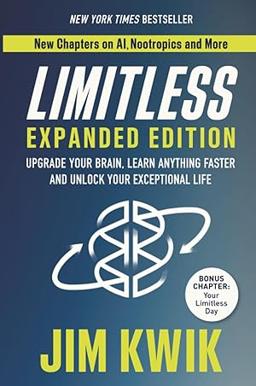
Limitless
Jim Kwik
Limitless, written by a brain coach who works with performers across sport, film, and business, is a practical guide to memory, focus, and accelerated learning. If this article made you want to act on what you read, it's a good place to start.
Curious where you actually rank?
Free IQ test · 36 questions · Instant results · No sign-up
Start Free IQ Test →Already know your score? Convert it to a percentile →