
The Bottleneck in Your Thinking
Every cognitive task you perform, solving a problem, following an argument, learning a skill, passes through a bottleneck. That bottleneck is working memory: the cognitive workspace where you hold and manipulate information in the moment. Understanding its capacity and its limits is one of the most practically useful things you can know about your own cognition.
Cognitive load theory, developed by educational psychologist John Sweller in the 1980s and refined extensively since, provides a framework for understanding how working memory capacity affects performance and learning. Its predictions have been validated across thousands of studies in educational, clinical, and occupational contexts.
Working Memory: The Core Constraint
Working memory has a sharply limited capacity. The classic estimate from Miller (1956) was "7 ± 2 chunks" of information. More recent research by Cowan (2001) revised this downward to approximately 4 ± 1 chunks for purely novel information, items you cannot link to existing knowledge.
The practical implication is severe: when working memory is full, additional information cannot be integrated. New elements push out existing ones. Complex instructions become impossible to follow completely. Multi-step problems cannot be tracked. The bottleneck is real, biological, and applies to everyone regardless of IQ, though IQ and working memory capacity are moderately correlated (r ≈ 0.50).
The Three Types of Cognitive Load
Sweller distinguishes three types of cognitive load that consume working memory capacity:
Intrinsic load, the inherent complexity of the material itself. Solving a differential equation has high intrinsic load; recognising a word has low intrinsic load. Intrinsic load is determined by the number of elements that must be processed simultaneously to understand the material.
Extraneous load, cognitive demands imposed by the environment or presentation that do not contribute to learning or task completion. A badly designed interface, cluttered instructions, or unnecessary complexity in how information is presented all generate extraneous load. This is the category most amenable to external reduction.
Germane load, cognitive effort directed toward constructing long-term memory schemas. This is the "useful" load: effort spent building mental models and connecting new information to existing knowledge. The goal of good cognitive design is to minimise extraneous load to leave maximum capacity for germane load.
Discover Your IQ Score
Free 36-question assessment. Instant results. No sign-up required.
Take the Free IQ Test →Chunking: The Key to Bypassing the Limit
If working memory is limited to ~4 novel chunks, how can experts process vastly more complex information than novices in their domain? The answer is chunking, the process of organising individual items into larger, meaningful units that can be held as a single chunk.
A novice reading a chess position sees individual pieces in individual squares, dozens of chunks. A grandmaster sees patterns: "fianchettoed bishop, isolated queen's pawn, kingside castle pressure", three or four chunks that each encode rich tactical information. The grandmaster is not bypassing working memory limits; they are using existing long-term memory to compress information into larger units before working memory processes it.
This is why deliberate practice in any complex domain produces cognitive efficiency gains: you are building chunks that let you process more information within the same working memory capacity.
The Worked Example Effect
One of Sweller's most striking predictions concerned how people learn. The intuition in most educational design is that actively solving problems is better for learning than watching someone else work through them. Sweller predicted the opposite for novices, and the research consistently supported him. For people with low prior knowledge, studying worked examples produces better learning outcomes than attempting to solve equivalent problems independently. The mechanism: the novice trying to solve a novel problem spends most of their working memory on the problem-solving process itself, generating strategies, evaluating options, tracking progress, leaving very little capacity for the schema-building that constitutes actual learning. The worked example removes the problem-solving burden and directs all available capacity toward understanding the solution structure.
The effect reverses as expertise develops, the "expertise reversal effect." For learners who already have strong domain schemas, worked examples become redundant and can actually slow learning compared to problem-solving practice. This is one of cognitive load theory's more practically useful predictions: the same instructional design is not optimal for both novices and experts, and treating them the same way systematically underserves one of them.
Implications for Your Cognitive Performance
Understanding cognitive load theory changes how you approach complex tasks:
- Reduce extraneous load first, eliminate distractions, simplify your environment, and use clear external representations (notes, diagrams) to offload information that does not need to stay in working memory
- Work within capacity, not beyond it, breaking complex problems into sequential steps is not a sign of cognitive weakness; it is an accurate response to working memory constraints
- Build domain chunks deliberately, the long-term solution to cognitive load is schema-building: regular, deliberate engagement with a domain progressively increases the size of chunks your working memory can handle within it
- Recognise fatigue effects, working memory capacity degrades with fatigue, stress, and depletion. A complex problem that feels impossible at 10pm may be straightforward at 9am
IQ tests measure working memory capacity as one component of general intelligence. If you want to perform at your ceiling on any cognitive assessment, the immediate actionable goal is reducing extraneous load, testing environment, sleep, and attentional state, as much as possible before sitting down.

AJ Dorey
Founder, IQScore
AJ Dorey is an English software developer who researches and writes about intelligence and cognition. He built IQScore because most online IQ tests are broken — they either inflate scores to keep people happy or bury results behind a paywall after 20 minutes of questions.
Further Reading
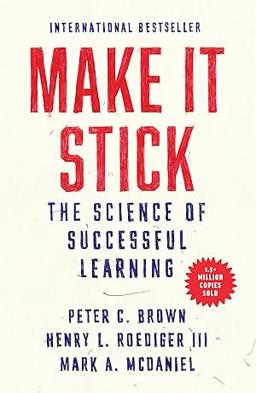
Make It Stick: The Science of Successful Learning
Brown, Roediger & McDaniel
Make It Stick translates the cognitive science of learning into practical strategies, and much of what it recommends is directly explained by cognitive load theory. Useful reading if you want to apply what this article covers.
Curious where you actually rank?
Free IQ test · 36 questions · Instant results · No sign-up
Start Free IQ Test →Already know your score? Convert it to a percentile →