
What "IQ Is 50–80% Genetic" Really Means
You've probably seen the claim that IQ is "50–80% genetic." Most people read that and think: my IQ is mostly fixed by my DNA. That's not what it means, and getting this wrong leads to completely wrong conclusions about what you can and can't change.
Heritability is a population-level measure. It doesn't tell you how much of your IQ came from your genes. It tells you how much of the difference between people in a given population is explained by genetic variation. Those are very different things.
Here's a simple way to see why: if you raised every person in the exact same environment, all differences in IQ would be genetic, heritability would be 100%. If you took genetically identical people and gave them wildly different environments, heritability would be 0%. The number shifts with the population and context. It is not a fixed property of intelligence itself.
What Twin Studies Show
The strongest evidence for genetic influence on IQ comes from twin studies, particularly comparisons of identical (monozygotic) twins raised apart. Identical twins share virtually all of their DNA. When raised in different families, they still show IQ correlations of approximately 0.75, substantially higher than the ~0.4 correlation between non-identical twins raised together.
~0.75
IQ correlation between identical twins raised apart, compared to ~0.4 for fraternal twins raised together
Adoption studies support this picture: by adolescence, the IQ of adopted children correlates more strongly with their biological parents than their adoptive parents, even when the adoptive family provided years of additional cognitive enrichment.
Discover Your IQ Score
Free 36-question assessment. Instant results. No sign-up required.
Take the Free IQ Test →Heritability Increases With Age
One of the most counterintuitive findings in intelligence genetics is that heritability increases across development. In young children, heritability estimates for IQ are relatively modest, around 40–50%. By adulthood, they rise to 60–80%. By late adulthood, some studies report estimates approaching 80%.
This seems backwards. Shouldn't the environment accumulate more influence over time? The explanation is that as people age, they increasingly self-select their environments based on their genetically influenced tendencies. An intellectually curious child (partly due to genetics) seeks out books, stimulating peers, and educational opportunities, actively constructing an environment that amplifies their genetic predispositions. The environment does not become less important; it becomes increasingly correlated with genetic characteristics.
The Gene-Environment Interaction
Heritability estimates are not constant across environments. A crucial finding by Turkheimer and colleagues (2003) showed that heritability of IQ was near zero in impoverished families and near 0.7 in affluent families. In impoverished environments, environmental factors (nutrition, safety, stimulation, stress) dominate cognitive outcomes, genetic differences are masked. In enriched environments, where basic needs are met and stimulation is ample, genetic differences emerge more clearly.
This finding has profound implications for social policy: interventions that improve environments for disadvantaged children do not conflict with the genetic data. They unlock genetic potential that was previously suppressed by environmental constraints.
Which Genes Are Involved?
Despite the strong evidence for genetic influence, identifying specific genes responsible has proven enormously difficult. Genome-wide association studies (GWAS) have identified over 1,000 genetic variants associated with educational attainment and cognitive ability, but each contributes only a tiny effect, typically less than 0.05 IQ points. Intelligence is highly polygenic: it is influenced by thousands of small genetic effects, not a handful of "intelligence genes."
This explains why IQ does not follow simple Mendelian inheritance patterns, and why attempts to select for intelligence through genetic engineering face profound complexity. You are not dealing with one or two switches; you are dealing with a distributed network of thousands of small contributors.
Epigenetics: The Layer Between Genes and Environment
Epigenetics adds another layer of complexity that the simple heritability number obscures. Epigenetic mechanisms, chemical modifications that change how genes are expressed without altering the underlying DNA sequence, are sensitive to early experience. Chronic stress in early childhood, particularly the kind associated with poverty, abuse, or severe neglect, produces measurable epigenetic changes in gene expression patterns linked to stress regulation and cognitive development. These changes can persist into adulthood and in some cases across generations.
What this means practically is that the 50–80% heritability figure is not a fixed ratio. It is a snapshot taken in a particular population at a particular time. Heritability measures genetic variance relative to environmental variance, so as environments become more equal, heritability estimates rise, not because genes became more powerful but because environmental differences shrank. A society that eliminated all early childhood adversity would show higher IQ heritability than one with large disparities in early experience, simply because the genetic differences would have more room to express themselves.
This framing matters. It means the genetic evidence and the argument for early childhood investment are not in tension. The genes set a range; the early environment determines where in that range a child ends up.
The Bottom Line
Genes matter significantly for intelligence. The evidence from twin and adoption studies is robust. But heritability is not destiny. Large environmental effects are well documented, the Flynn Effect alone proves that average IQ can rise 30 points across a century through environmental change. The right interpretation of the genetic data is not "IQ is fixed by biology" but rather "genetic differences are real, and the environment determines how fully those differences are expressed."

AJ Dorey
Founder, IQScore
AJ Dorey is an English software developer who researches and writes about intelligence and cognition. He built IQScore because most online IQ tests are broken — they either inflate scores to keep people happy or bury results behind a paywall after 20 minutes of questions.
Further Reading
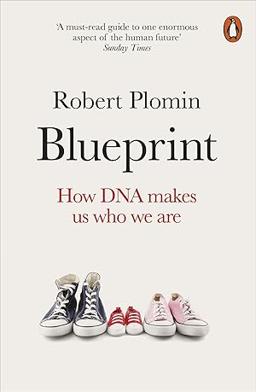
Blueprint: How DNA Makes Us Who We Are
Robert Plomin
Blueprint by one of the world's leading behavioural geneticists makes a compelling case for how much DNA shapes who we become. If the heredity section of this article surprised you, his book will challenge your assumptions further.
Curious where you actually rank?
Free IQ test · 36 questions · Instant results · No sign-up
Start Free IQ Test →Already know your score? Convert it to a percentile →