Why Reading Is Cognitively Unusual
Reading is a remarkable cognitive activity. Unlike speech comprehension, which humans are biologically prepared for, reading is a learned skill that repurposes cortical regions originally evolved for other functions. The visual cortex learns to process letter forms. Language areas are recruited to map visual symbols onto sounds and meanings. Frontal regions coordinate the integration of meaning across sentences and paragraphs. This co-option of multiple brain systems is part of what makes reading so cognitively demanding, and so cognitively beneficial.
Neuroscientist Maryanne Wolf calls reading a "miracle" of cognitive plasticity precisely because the brain was not built for it. It learns to do it anyway, and in doing so, it builds new neural connections that serve broader cognitive functions.
Structural Brain Changes From Reading
Studies comparing literate and illiterate adults have revealed structural brain differences. Literate adults show greater grey matter density in visual word form areas, stronger white matter connectivity between visual and language regions, and larger corpus callosum cross-sections (supporting communication between hemispheres) than illiterate adults matched for age and socioeconomic status.
These are not just correlations with intelligence, they appear to be consequences of the reading process itself, since the differences are found even when controlling for IQ and education.
20 min/day
Amount of independent reading associated with placing in top reading decile in children, exposes them to ~1.8 million words per year vs 8,000 in the bottom decile
Discover Your IQ Score
Free 36-question assessment. Instant results. No sign-up required.
Take the Free IQ Test →Vocabulary and Crystallised Intelligence
Reading is the single most efficient way to build vocabulary in children and adults. The vocabulary exposure through reading, particularly through extended text rather than conversation, is several orders of magnitude larger than through any other naturalistic experience. Avid readers encounter many low-frequency words that almost never appear in everyday conversation, building a lexical richness that affects verbal reasoning performance directly.
Vocabulary is a strong proxy for crystallised intelligence and a reliable predictor of academic and professional achievement. The reading–vocabulary–crystallised intelligence pipeline is one of the most well-documented causal chains in developmental cognitive science.
Dyslexia: When Reading Fails to Happen
The cognitive importance of reading is underscored by what happens when it fails to develop properly. Dyslexia, which affects roughly 10-15% of the population, primarily involves a phonological processing deficit that disrupts the visual-to-sound mapping reading requires. Neuroimaging in dyslexic individuals shows reduced activation in the left hemisphere visual word form area and reduced white matter connectivity between visual and language regions, the opposite pattern of what's found in experienced readers.
What's particularly striking is that effective phonological training reverses some of these differences. Intensive reading intervention programmes in children with dyslexia produce measurable changes in brain activation patterns toward more typical profiles, within months. The brain's plasticity for reading is evidently bidirectional, the structural changes that reading produces can be built through training even when reading itself has been difficult.
Fiction and Theory of Mind
A particularly interesting body of research concerns the effects of fiction reading on social cognition. Multiple studies have found that people who read more literary fiction perform better on theory-of-mind tasks, the ability to understand other people's mental states, perspectives, and intentions.
The proposed mechanism is direct: fiction, particularly literary fiction with complex characters, requires the reader to continuously model the mental states of fictional people who think and feel differently from themselves. This sustained practice in perspective-taking may transfer to real-world social cognition. The finding is contested, the effect sizes are moderate and some replications have been mixed, but the direction is consistent.
Deep Reading vs Skimming
Not all reading produces the same cognitive effects. Maryanne Wolf and others have argued that extended deep reading, sustained engagement with long-form text, exercises cognitive capacities that short-form, hypertext, or skimming-based reading does not. The executive attention required to follow an argument across a chapter, the working memory demanded by narrative complexity, and the inference-drawing required by dense prose all provide cognitive exercise that scanning social media or reading summaries does not replicate.
This argument has practical implications for the trend toward shorter, more fragmented reading. The cognitive benefits of reading are probably not uniform across reading formats, they are concentrated in the extended, deep engagement that long-form reading requires.
Audiobooks occupy an interesting middle position. Listening to complex books activates overlapping language and comprehension networks to reading, and avid audiobook listeners show some of the vocabulary and theory-of-mind effects associated with reading. What appears to differ is the phonological encoding and visual word form processing that silent reading specifically trains. For vocabulary acquisition and most comprehension outcomes, audiobooks and print appear roughly equivalent. For the specific visual word form area development that underlies reading fluency, there is no substitute for the visual act of reading itself.

AJ Dorey
Founder, IQScore
AJ Dorey is an English software developer who researches and writes about intelligence and cognition. He built IQScore because most online IQ tests are broken — they either inflate scores to keep people happy or bury results behind a paywall after 20 minutes of questions.
Further Reading
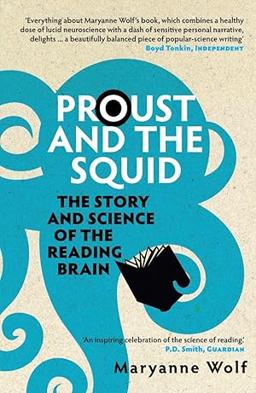
Proust and the Squid
Maryanne Wolf
Proust and the Squid is the most detailed and readable account of how the reading brain develops, what changes neurologically when we learn to read, and why deep reading is unlike any other cognitive activity.
Curious where you actually rank?
Free IQ test · 36 questions · Instant results · No sign-up
Start Free IQ Test →Already know your score? Convert it to a percentile →