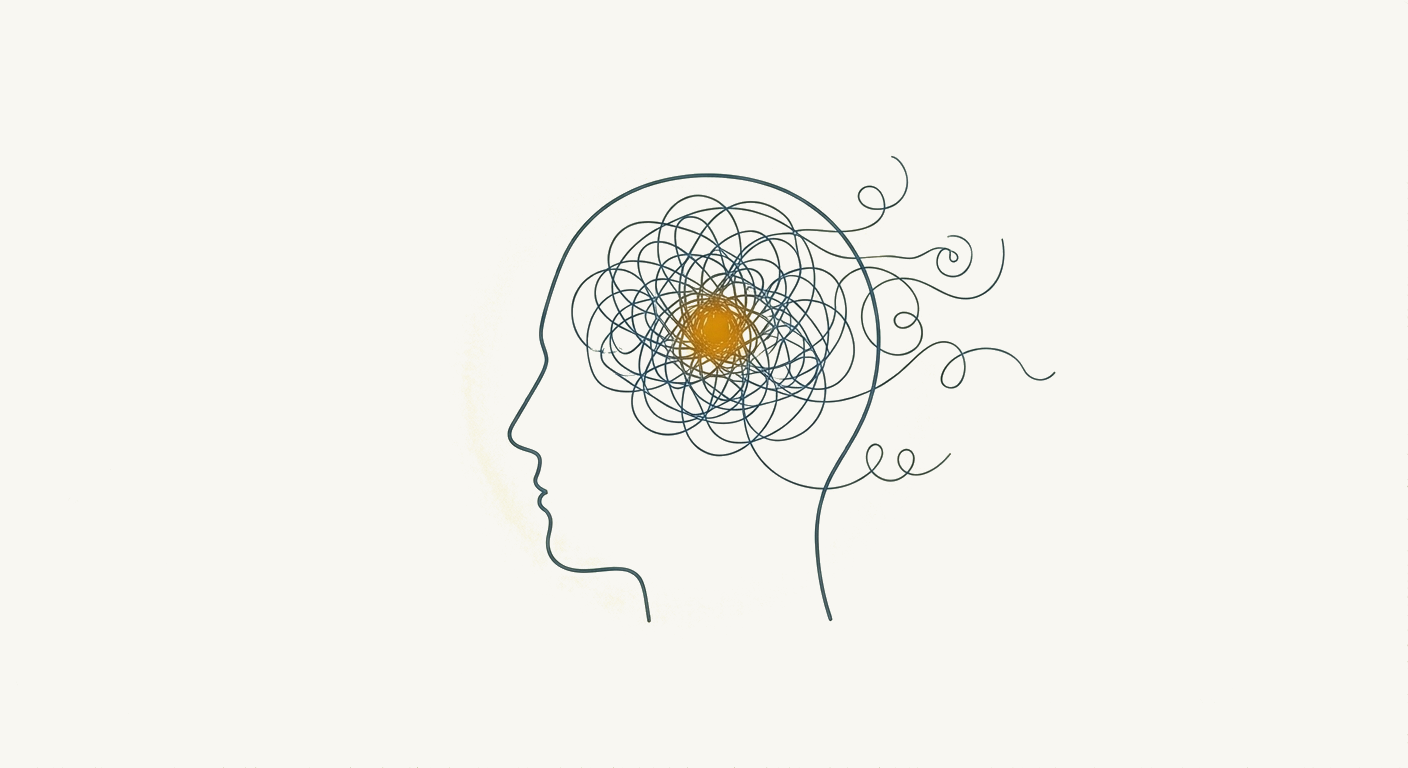
Stress Is Not Just a Feeling: It Is a Cognitive Impairment
The common framing of stress is psychological: it makes you feel anxious, overwhelmed, or tense. The neurological reality is more concrete. Stress hormones, primarily cortisol and adrenaline, directly alter the functioning of the brain regions responsible for reasoning, memory, and decision-making. The cognitive effects of stress are not just about subjective discomfort, they are measurable changes in the hardware of thinking.
Understanding this distinction matters for anyone who has ever scored lower on a test than they expected, struggled to think clearly under pressure, or noticed their decision-making deteriorate during difficult periods. These are not personal failures. They are predictable physiological consequences of an activated stress response.
The Yerkes-Dodson Curve: Stress Is Not Uniformly Bad
The relationship between stress (arousal) and performance is not linear. The Yerkes-Dodson law, established over a century ago and extensively replicated, describes an inverted-U relationship: performance improves as arousal increases from low to moderate levels, then declines as arousal becomes high.
Low arousal (boredom, under-stimulation) produces poor performance because attention and motivation are insufficient. Moderate arousal sharpens focus and provides the motivational drive to engage with challenging material. High arousal, the activated stress response, degrades performance, particularly on complex cognitive tasks requiring flexibility and working memory.
The practical implication: some pressure is useful. Deadlines, competition, and stakes improve performance up to a point. Beyond that point, the stress response actively works against the cognitive systems you need most.
The Yerkes-Dodson curve: performance peaks at moderate arousal before declining sharply as stress becomes excessive.
What Cortisol Does to the Brain
Cortisol, the primary stress hormone, has well-documented effects on the brain regions most critical for cognitive performance:
- Prefrontal cortex, High cortisol reduces activity in the prefrontal cortex, the seat of executive function: planning, reasoning, working memory, and impulse control. This is the region most directly involved in the reasoning tasks that IQ tests measure.
- Hippocampus, The hippocampus is involved in forming new memories and spatial reasoning. Cortisol inhibits hippocampal function acutely. Chronic stress causes measurable hippocampal volume reduction over time.
- Amygdala, Stress activates the amygdala (threat response), which competes with prefrontal cortex activity. When the amygdala is highly activated, prefrontal processing is suppressed. This is sometimes described as the brain's "hijack" response, emotional reactivity takes over from deliberate reasoning.
10–15 pts
Estimated IQ-equivalent reduction from high test anxiety in some research populations
Discover Your IQ Score
Free 36-question assessment. Instant results. No sign-up required.
Take the Free IQ Test →Acute Stress vs Chronic Stress
It is important to distinguish between two different stress patterns, which have different cognitive consequences:
Acute stress (a sudden stressor, a high-stakes test, a time-pressured decision) temporarily reduces prefrontal function and working memory. The impairment is real but typically reverses once the stressor passes. Performance returns to baseline when the stress response subsides.
Chronic stress (sustained pressure over weeks, months, or years) produces cumulative structural changes. The hippocampus literally shrinks under prolonged cortisol exposure. The default mode of the HPA (hypothalamic-pituitary-adrenal) axis shifts, making the stress response more reactive and harder to disengage. These changes do not reverse immediately when the stressor is removed, recovery takes time and active intervention.
Test Anxiety Specifically
Test anxiety is a well-studied phenomenon that sits at the intersection of stress and cognitive performance. Research consistently shows that individuals with high test anxiety perform worse on standardised cognitive tests than would be predicted by their actual ability, not because they are less intelligent, but because the anxiety consumes working memory resources that would otherwise be applied to the task.
The mechanism: anxious thoughts ("I'm going to fail," "I don't know this") occupy working memory. Because working memory capacity is limited, cognitive resources devoted to anxious ideation are not available for problem-solving. The result is a score that understates true ability.
Acute stress also narrows the focus of attention itself, not just processing capacity. Under threat, the brain directs attention toward danger-relevant information and away from task-relevant information. Psychologists call this cognitive narrowing. It is adaptive for physical danger and actively counterproductive for a matrix reasoning problem. The person who is genuinely stressed during a cognitive assessment is not just slower, they are, in a neurological sense, partly engaged in threat surveillance rather than test-taking. The two tasks compete for the same prefrontal resources.
What Effectively Reduces Stress-Related Cognitive Impairment
- Aerobic exercise, Has the strongest evidence base for HPA axis regulation and cortisol reduction. Regular exercise reduces baseline cortisol and improves the brain's stress recovery mechanisms.
- Sleep, Addresses both the cause and the consequence. Poor sleep elevates cortisol; high cortisol disrupts sleep. Breaking this cycle through consistent sleep hygiene has measurable cognitive benefits.
- Expressive writing before high-stakes tasks, Psychologist Sian Beilock at the University of Chicago published evidence in Science (2011) that writing about your anxieties for ten minutes before a high-stakes test reduces performance decrements from test anxiety, specifically in people with high working memory who are most susceptible to anxiety's interference. Writing the anxiety down appears to partially offload it from working memory, freeing resources for the actual task.
If your score felt lower than expected, and you tested during a high-stress period, that is not an excuse, it is a likely explanation. Retesting under calmer conditions will give you a more accurate picture of your actual ability.

AJ Dorey
Founder, IQScore
AJ Dorey is an English software developer who researches and writes about intelligence and cognition. He built IQScore because most online IQ tests are broken — they either inflate scores to keep people happy or bury results behind a paywall after 20 minutes of questions.
Further Reading
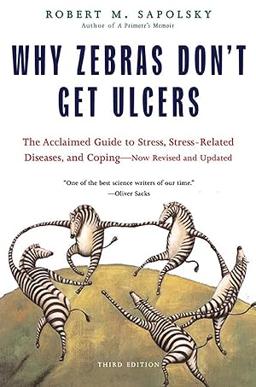
Why Zebras Don't Get Ulcers
Robert Sapolsky
Why Zebras Don't Get Ulcers is the gold standard on stress biology, deeply researched, unexpectedly funny, and one of the best popular science books ever written. Essential reading if this topic interests you.
Curious where you actually rank?
Free IQ test · 36 questions · Instant results · No sign-up
Start Free IQ Test →Already know your score? Convert it to a percentile →