The Popular Claim
The idea that introverts are smarter, or at least more intellectually inclined, than extroverts has become a cultural fixture, fuelled by books like Susan Cain's "Quiet" and decades of anecdotes about solitary thinkers changing the world. The truth is more nuanced: introversion and IQ are weakly related at best, and the relationship varies significantly by what you measure and how.
What the Data Shows
The correlation between introversion and IQ in large population studies is typically small, approximately r = 0.10 to 0.20. This means introversion explains at most 4% of the variance in IQ scores. In practical terms, knowing someone's introversion–extroversion score tells you very little about their intelligence, and vice versa.
In some studies, the correlation disappears entirely when controlling for socioeconomic background and educational attainment, suggesting that any observed relationship may be mediated by other factors rather than being a direct introversion–intelligence link.
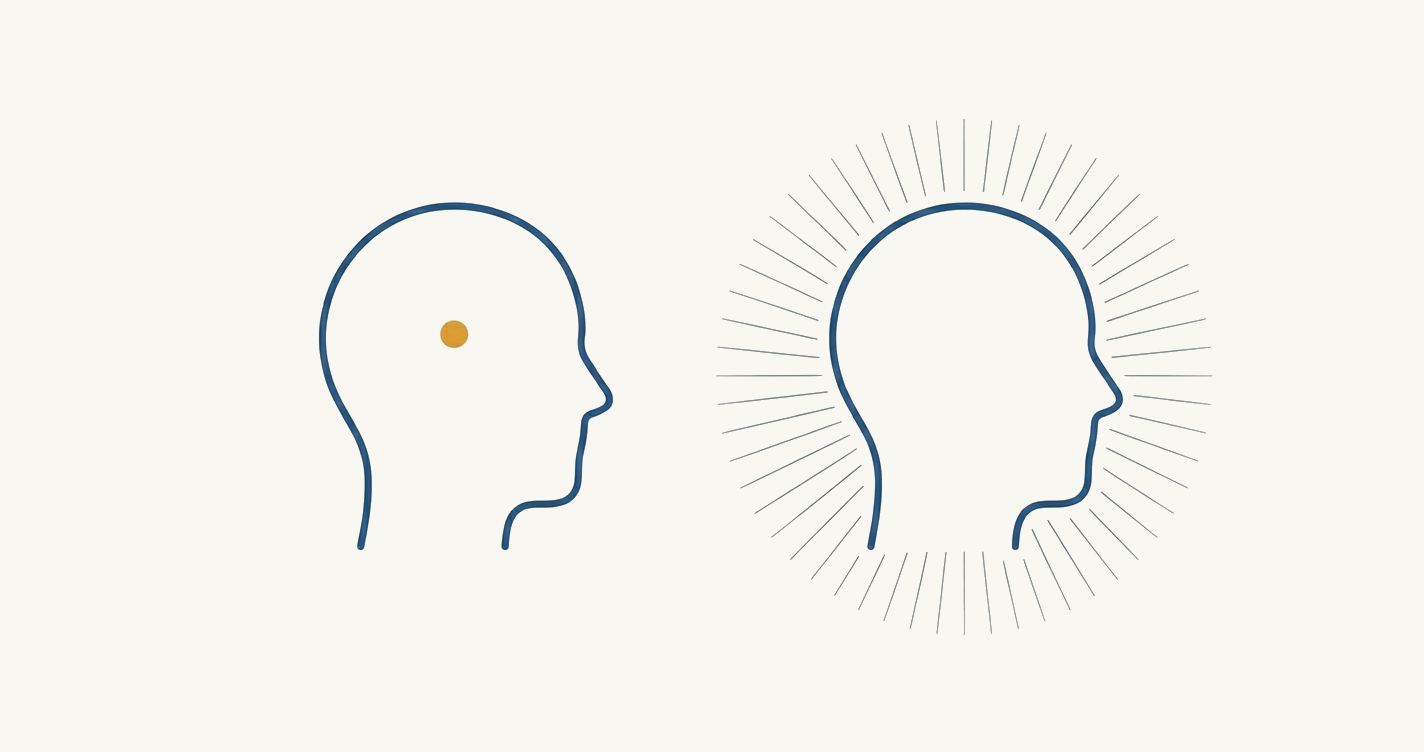
The most influential theoretical account of even the weak correlation that does appear is Hans Eysenck's cortical arousal theory. Eysenck proposed that introverts have chronically higher baseline cortical arousal than extroverts, they're essentially running "hotter" neurologically at rest, and therefore seek less external stimulation to stay at their optimal state. At high IQ levels, this might produce a convergence: highly intelligent people often prefer intellectually demanding environments, which are internally stimulating, and introverts do too, though for different reasons. The theory doesn't predict that introversion causes higher intelligence; it suggests the two traits might weakly co-occur because both are associated with a preference for cognitively complex, low-noise environments.
r ≈ 0.10
Typical correlation between introversion and IQ in large population samples, small enough to be practically negligible
Why the Myth Persists
Several factors sustain the introvert-is-smarter narrative despite weak evidence:
Intellectual domain bias. High IQ is most visible in academic and intellectual contexts where introverted behaviours (sustained reading, solitary study, preference for depth over breadth) tend to be rewarded. High-IQ extroverts who express their intelligence through leadership, social entrepreneurship, or oral communication are less likely to fit the cultural image of "smart."
Preference for solitary cognitive work. Introverts may show higher academic performance relative to their IQ because they prefer the kind of sustained solo work that academic success rewards. This is a preference and performance strategy effect, not an intelligence effect.
Openness to experience confound. The Big Five personality trait most reliably associated with IQ is Openness to Experience (r ≈ 0.30–0.40), which includes intellectual curiosity, aesthetic sensitivity, and abstract thinking. Openness correlates modestly with introversion in some measures, which may produce an apparent introversion–IQ relationship that is actually driven by openness.
Discover Your IQ Score
Free 36-question assessment. Instant results. No sign-up required.
Take the Free IQ Test →What Personality Predicts
The Big Five personality traits vary in their relationships with cognitive performance:
- Openness to Experience, the strongest personality predictor of IQ (r ≈ 0.30–0.40), and one of the few personality traits that shows meaningful overlap with cognitive ability
- Conscientiousness, the strongest personality predictor of academic achievement and job performance, independent of IQ; predicts grades and career success more reliably than introversion does
- Extroversion, weak relationship with IQ; stronger relationship with positive affect and social outcomes
- Neuroticism, modest negative relationship with cognitive performance under test conditions, likely mediated by anxiety effects on working memory
Where Introversion Does Have Genuine Predictive Value
What introversion actually predicts, independent of IQ, is performance on tasks requiring sustained concentration with minimal external disruption. Introverts tend to be less degraded by background noise and social activity, which makes them somewhat better suited to prolonged solo cognitively demanding work when given a quiet environment. This shows up as higher academic GPAs in some studies, not because introverts are more capable, but because they're better adapted to the institutional format of school, which rewards exactly this kind of sustained, distraction-resistant solo effort.
Extroversion predicts different outcomes. Leadership emergence, social influence, entrepreneurial activity, and subjective wellbeing all correlate more strongly with extroversion than introversion. High-IQ extroverts tend to express cognitive ability through persuasion, collaboration, and social coordination, channels the typical "smart person" stereotype doesn't capture. The cultural bias runs the other direction: we're quicker to read solitary, bookish behaviour as evidence of intelligence than we are to read confident social leadership that way, even when the underlying cognitive ability is identical.
The Practical Bottom Line
Introversion and IQ are not meaningfully correlated. The introvert-is-smarter stereotype likely persists because introverted styles of intellectual engagement are more visible and culturally legible as "intelligence" than extroverted ones, not because introversion produces or reflects higher cognitive capacity.
The personality traits that most consistently predict cognitive performance and academic achievement are Openness to Experience and Conscientiousness, neither of which maps cleanly onto the introversion–extroversion axis.

AJ Dorey
Founder, IQScore
AJ Dorey is an English software developer who researches and writes about intelligence and cognition. He built IQScore because most online IQ tests are broken — they either inflate scores to keep people happy or bury results behind a paywall after 20 minutes of questions.
Further Reading
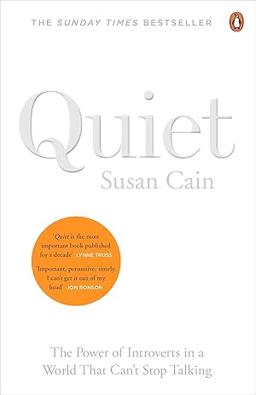
Quiet: The Power of Introverts in a World That Can't Stop Talking
Susan Cain
Quiet is one of the most thoughtful books written on introversion, what it actually means neurologically, why introverts are systematically undervalued in modern culture, and why the world needs both types of thinkers.
Curious where you actually rank?
Free IQ test · 36 questions · Instant results · No sign-up
Start Free IQ Test →Already know your score? Convert it to a percentile →