
When and Why Children Are Tested
Children are typically referred for IQ testing in one of three contexts: suspected learning disabilities or developmental delays, possible giftedness for educational programme placement, or comprehensive neuropsychological evaluation following academic struggles, attention concerns, or behavioural issues. In each context, the test serves a different purpose and the score should be interpreted differently.
Understanding what childhood IQ scores actually measure, and where they fall short, is important for any parent navigating this process.
What Childhood IQ Tests Measure
The most widely used childhood IQ batteries are the Wechsler Intelligence Scale for Children (WISC-V, ages 6–16) and the Stanford–Binet Intelligence Scales (SB5, ages 2 and up). Both produce a full-scale IQ along with multiple index scores measuring distinct cognitive factors:
- Verbal Comprehension Index (VCI), vocabulary, conceptual thinking, verbal reasoning from knowledge
- Visual Spatial Index (VSI), spatial reasoning, block design, visual problem-solving
- Fluid Reasoning Index (FRI), pattern recognition, matrix reasoning, novel problem-solving
- Working Memory Index (WMI), digit span, picture span, short-term memory tasks
- Processing Speed Index (PSI), symbol search, coding, visual-motor speed
The full-scale IQ is a composite of all five indexes. A single score can mask enormous variation within the profile, a child might score 120 on fluid reasoning and 85 on processing speed. Interpreting only the composite score loses critical diagnostic information.
How Stable Are Childhood IQ Scores?
IQ scores become more stable with age, but early childhood scores are considerably less predictive than adult scores. Correlations between IQ measured at age 5 and IQ measured at age 17 are typically around r = 0.60, meaningful but far from deterministic. Significant score changes of 10–15 points occur in roughly 20% of children tested multiple times during development.
Several factors can cause scores to change substantially: significant changes in educational quality or home environment, identification and treatment of previously undiagnosed conditions (ADHD, vision problems, hearing loss), resolution of anxiety or emotional issues that were suppressing performance, and normal developmental variation in cognitive trajectory.
This is why responsible psychologists emphasise that a childhood IQ score is a snapshot of current performance, not a fixed measure of intellectual potential.
Discover Your IQ Score
Free 36-question assessment. Instant results. No sign-up required.
Take the Free IQ Test →Questions Worth Asking the Psychologist
Most parents leave a psychoeducational evaluation without asking enough. The report will give you a composite score and a set of index scores. What it often won't tell you, unless you ask, is which specific findings the psychologist considers most meaningful for your child's day-to-day functioning.
These questions tend to produce the most useful answers. What is the biggest gap between this child's highest and lowest index scores, and what does that profile suggest practically? Is the composite score a valid summary of this child's ability, or does the scatter across subtests make it misleading? What specific classroom or home strategies does this particular profile point to? When would re-testing be appropriate, given what we see here?
We'd also add one that parents rarely ask: what did the child's behaviour during testing tell you? A psychologist observes a child for two to four hours. They see how quickly motivation drops, whether performance declined on timed tasks specifically, how the child handled frustration, and whether there were conditions that appeared to suppress performance. That observational data is often more clinically meaningful than the numbers themselves. It rarely makes it into the written report unless you ask for it directly.
What to Do With the Results
If your child scored lower than expected: Focus on understanding why, not on the number. A lower-than-expected score warrants investigation into the factors listed above, sensory issues, ADHD, anxiety, learning disabilities, or environmental factors. The score is the beginning of inquiry, not the conclusion.
If your child scored in the gifted range: Advocate for appropriate educational challenge. The evidence for acceleration programmes is strong; the risk of underchallenging a genuinely high-ability child (chronic boredom, underachievement, disengagement) is real. Work with the school to identify what educational match is appropriate.
Regardless of score: Do not share the specific number with your child in a way that creates a fixed self-concept. Decades of research on mindset (Dweck's growth vs. fixed mindset literature) show that children who understand their intelligence as fixed, whether high or low, tend to underperform children who understand it as developable. The score describes where your child is; it does not describe what they are capable of becoming.
Understanding the Limits
An IQ score, even a carefully administered clinical one, does not measure creativity, emotional intelligence, motivation, resilience, social skill, practical judgment, or the domain-specific expertise that drives most real-world achievement. These attributes matter as much or more than what any cognitive test captures, and they are all more amenable to development than IQ.
Use the testing result as information for making good educational decisions. Do not use it as a label.

AJ Dorey
Founder, IQScore
AJ Dorey is an English software developer who researches and writes about intelligence and cognition. He built IQScore because most online IQ tests are broken — they either inflate scores to keep people happy or bury results behind a paywall after 20 minutes of questions.
Further Reading
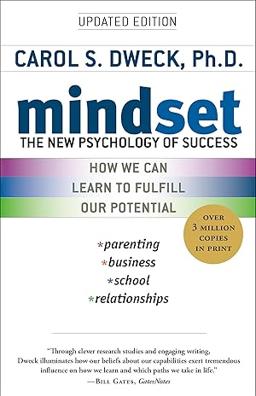
Mindset: The New Psychology of Success
Carol Dweck
Mindset is essential reading for any parent navigating ability and performance. Dweck's research on fixed versus growth mindset shows how our beliefs about children's intelligence shape their motivation and outcomes, far more than any single test score does.
Curious where you actually rank?
Free IQ test · 36 questions · Instant results · No sign-up
Start Free IQ Test →Already know your score? Convert it to a percentile →