Two Things That Are Genuinely Different
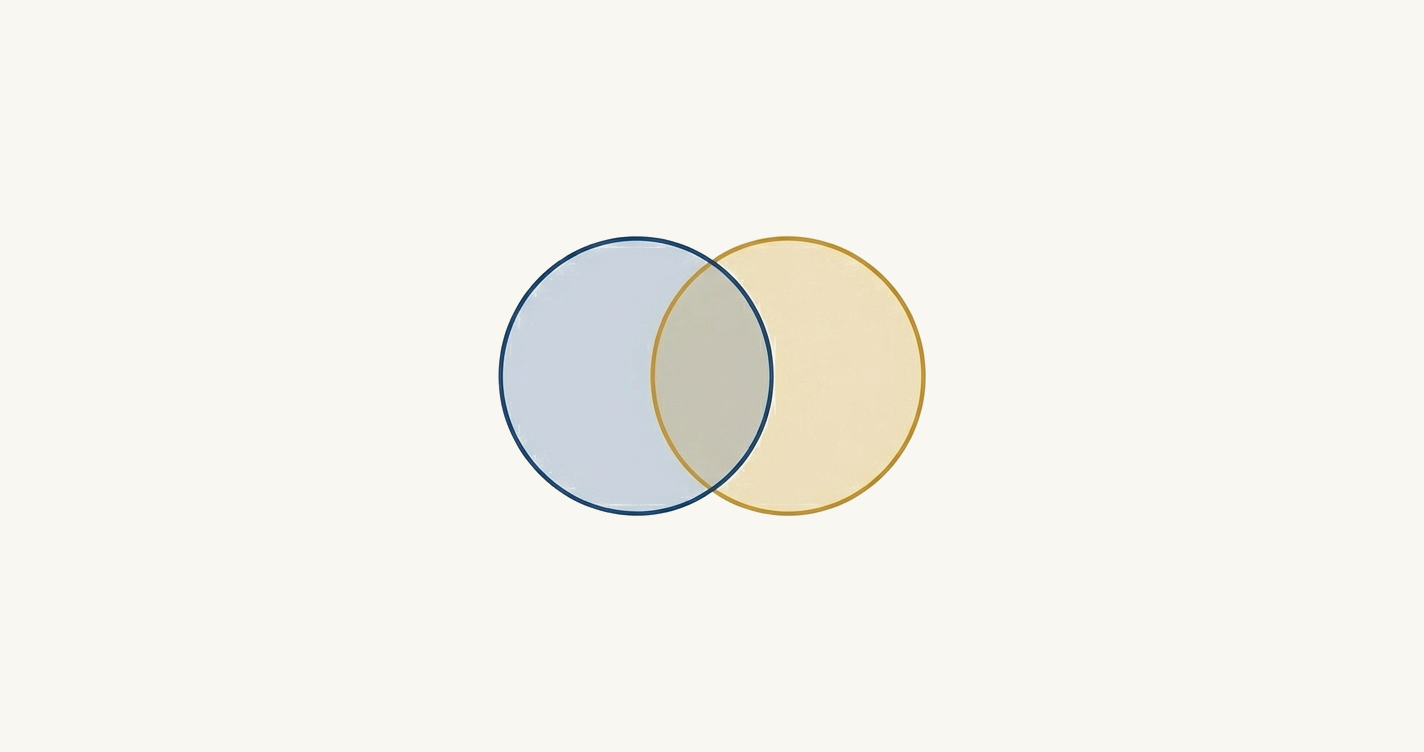
The IQ vs EQ debate generates more heat than light, largely because the two concepts are frequently misrepresented. IQ and emotional intelligence are not competing definitions of the same thing, they measure genuinely different cognitive and psychological capacities, and the evidence for each looks quite different.
Understanding both clearly is more useful than declaring a winner.
What IQ Predicts in Practice
The predictive validity of IQ, measured as g, the general factor of intelligence, is among the most replicated findings in all of psychology. High IQ reliably predicts:
- Academic performance across all subjects and levels
- Job performance, particularly in cognitively complex roles
- Learning speed and the ability to acquire new skills
- Income, though the effect size is modest once education is controlled for
- Health outcomes and longevity, via pathways involving health literacy and decision-making
These are not trivial associations. The correlation between IQ and job performance in complex roles (medicine, law, engineering, research) is approximately 0.5, stronger than almost any other single predictor. IQ tests are good at measuring what they were designed to measure: the ability to learn, reason, and solve novel problems.
What IQ Does Not Predict
What IQ does not predict, or predicts only weakly, is equally important:
- Relationship quality and social effectiveness
- Leadership effectiveness (correlation ~0.2, modest at best)
- Emotional resilience and the ability to manage stress
- Creative achievement in the arts
- Life satisfaction and subjective wellbeing
The absence of these correlations is not a flaw in IQ tests. These capacities are simply not what the tests are measuring. A thermometer is not broken because it cannot measure humidity.
The job performance data also shows a threshold effect that changes the IQ vs EQ comparison at the high end. Research by Hunter and Schmidt, and later Kuncel and colleagues, suggests IQ's predictive power is strongest in the 85 to 115 range and begins to flatten above about 120. Once someone clears the cognitive threshold for a role, additional IQ points predict progressively less additional performance. This is one of the more honest arguments for EQ's importance in high-level positions, not that EQ matters more in absolute terms, but that at the high end of the cognitive distribution, IQ variation explains less of what separates good performers from great ones.
Discover Your IQ Score
Free 36-question assessment. Instant results. No sign-up required.
Take the Free IQ Test →Defining Emotional Intelligence
The term "EQ" (emotional quotient) was popularised by Daniel Goleman's 1995 book, though the underlying construct was defined academically by Salovey and Mayer. The rigorous definition involves four specific abilities:
- Accurately perceiving emotions in faces, voices, and images
- Using emotions to facilitate thinking (emotional facilitation)
- Understanding how emotions progress and interact
- Regulating emotions in oneself and influencing them in others
This ability-based model of EQ has genuine predictive validity for social outcomes, relationship satisfaction, leadership effectiveness, negotiation performance. The correlation between IQ and this form of EQ is approximately 0.1 to 0.2, meaning they are largely independent. Someone can be highly intelligent and emotionally obtuse. Someone can have modest intellectual ability and extraordinary social insight.
The measurement problem is real and worth understanding. Two competing approaches to testing EQ produce very different results. Ability-based tests like the Mayer-Salovey-Caruso Emotional Intelligence Test (MSCEIT) measure emotional ability directly, can you accurately identify the emotion in a photograph? Can you predict how a situation will make someone feel? Self-report measures like the EQ-i ask you to rate your own emotional skills. The problem is that self-report measures correlate heavily with personality traits (particularly agreeableness and neuroticism from the Big Five) and only weakly with actual emotional ability as measured by the MSCEIT. Depending on which measure you use, "EQ" refers to genuinely different constructs, and a lot of the EQ testing industry is built on the self-report version.
A Caution About Overselling EQ
Goleman's popular version of EQ substantially overstated the case. His claim that "EQ matters more than IQ" for success was based on a loose definition that included personality traits, motivation, and social skills, essentially bundling together everything not measured by IQ tests and calling it emotional intelligence. This inflated definition makes EQ appear to predict everything precisely because it has been defined as everything IQ is not.
The ability-based EQ model is more modest and more credible. EQ matters, significantly, for specific outcomes. It does not replace IQ as a general predictor of performance, and the idea that someone with low intellectual ability can compensate entirely through emotional skill is not well supported by evidence.
The Right Frame
IQ and EQ are not rivals. They are different tools measuring different things. For most cognitively complex work, both matter, IQ provides the raw problem-solving capacity, while EQ determines how effectively you collaborate, communicate, and navigate the human dimensions of the work.
A score on an IQ test tells you something real and valuable about one set of cognitive abilities. It tells you nothing about whether you are a good partner, a perceptive leader, or someone others find worth working with. Both are worth understanding on their own terms.

AJ Dorey
Founder, IQScore
AJ Dorey is an English software developer who researches and writes about intelligence and cognition. He built IQScore because most online IQ tests are broken — they either inflate scores to keep people happy or bury results behind a paywall after 20 minutes of questions.
Further Reading
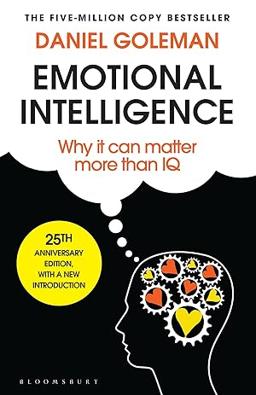
Emotional Intelligence
Daniel Goleman
Emotional Intelligence, the book that introduced EQ to mainstream thinking, goes well beyond IQ to explore what actually predicts success in relationships, work, and life. Worth reading if this article made you question what intelligence really means.
Curious where you actually rank?
Free IQ test · 36 questions · Instant results · No sign-up
Start Free IQ Test →Already know your score? Convert it to a percentile →