
Separating Signal from Noise
Few topics in cognitive health have more enthusiastic advocates and more methodological problems in the research base than meditation. The enthusiast literature extrapolates liberally from small studies with no active control groups, self-selected participants, and outcome measures that are not well-validated. The sceptic literature sometimes throws out genuine effects along with the overclaiming.
A careful reading of the higher-quality evidence, primarily meta-analyses and randomised controlled trials with active comparison conditions, suggests that meditation produces real, specific, and modest cognitive effects. The effects are real; they are not as broad or as large as the wellness industry claims.
The Two Main Types and What They Do
Research on meditation cognition benefits has clarified that "meditation" is not one thing, and different practices produce different effects. Focused attention (FA) meditation involves sustained concentration on a single object, typically the breath, with the task of noticing when attention wanders and redirecting it. Open monitoring (OM) meditation involves maintaining broad, non-reactive awareness of whatever arises in consciousness without attaching to any particular object. These two practices engage different attentional networks and produce somewhat different effects.
FA meditation improves sustained attention and attentional control more reliably; it is the type most closely resembling formal attention training. OM meditation is more consistently associated with cognitive flexibility and reduced mind-wandering in a diffuse sense. The distinction matters because most popular mindfulness programmes blend both, and the research literature has historically conflated them, making effect sizes harder to interpret. When studies specify the practice type, the effects become cleaner and more predictable.
Researcher Richard Davidson at the University of Wisconsin has studied advanced Tibetan Buddhist meditators with tens of thousands of hours of practice using EEG and fMRI. These long-term practitioners show striking differences in gamma wave activity, attentional stability, and emotional regulation compared to novices, differences that suggest genuine neural reorganisation at high practice levels. What the novice studies show is the early portion of a longer curve, not the ceiling.
What the Evidence Supports
Attention and sustained focus. This is the most consistent finding in the meditation literature, and the most mechanistically plausible. Mindfulness meditation is, at its core, attention training, repeatedly redirecting attention to a focal object and noticing when it has wandered. Meta-analyses of randomised controlled trials show moderate effects on sustained attention (effect size d ≈ 0.30–0.50) after 8-week programmes like MBSR (Mindfulness-Based Stress Reduction).
Attentional control and working memory. The ability to prevent intrusive thoughts from consuming working memory capacity shows improvement with sustained mindfulness practice. The mechanism is specific: meditation trains the metacognitive awareness to notice mind-wandering and redirect, exactly the executive attention function that limits working memory performance in distractible individuals.
Stress and cortisol reduction. The stress-reduction evidence is among the most robust in the meditation literature. Reduced stress and lower cortisol have downstream cognitive benefits, cortisol impairs prefrontal cortex function, making stress reduction an indirect but genuine cognitive benefit.
d=0.38
Mean effect size for meditation on attention tasks in active-controlled RCTs, modest but reliable
Discover Your IQ Score
Free 36-question assessment. Instant results. No sign-up required.
Take the Free IQ Test →What the Evidence Does Not Support
Several claims that circulate widely in meditation advocacy are not well-supported by controlled research:
- General IQ enhancement, meditation does not increase fluid intelligence or pattern recognition capacity in controlled studies
- Memory improvement beyond attention effects, better attention leads to better encoding, but this is an indirect effect; there is no evidence that meditation directly improves memory storage or retrieval
- "Rewiring" the brain in dramatic ways, neuroimaging studies do show structural differences between long-term meditators and non-meditators, but these are modest and the causal direction is complicated by the fact that people who sustain decades of meditation practice may differ from non-meditators in many ways
The Methodological Problems
Much meditation research suffers from a common set of limitations: no active control condition (comparison to a waiting list rather than another active intervention), self-selection bias (motivated individuals who volunteer for meditation studies are not representative of general populations), demand characteristics (participants know what they are supposed to be experiencing), and outcome measures heavily weighted toward self-report.
The higher-quality studies, active controls, pre-registered, with objective cognitive measures, find smaller effects than the weaker studies. This is the typical pattern when a field tightens its methods.
The Practical Bottom Line
Meditation is a genuine attention training intervention with moderate, specific cognitive benefits, primarily in sustained attention, attentional control, and stress reduction. It is not a cognitive enhancer in the broad sense. It is more like targeted physical therapy for a specific cognitive function than a general brain upgrade.
For someone whose cognitive performance is significantly limited by poor attentional regulation, mind-wandering, or stress-driven cognitive interference, an 8-week mindfulness programme is likely worth the investment. For someone whose attention is already well-regulated, the marginal cognitive benefit is small, though the stress management benefits remain.

AJ Dorey
Founder, IQScore
AJ Dorey is an English software developer who researches and writes about intelligence and cognition. He built IQScore because most online IQ tests are broken — they either inflate scores to keep people happy or bury results behind a paywall after 20 minutes of questions.
Further Reading
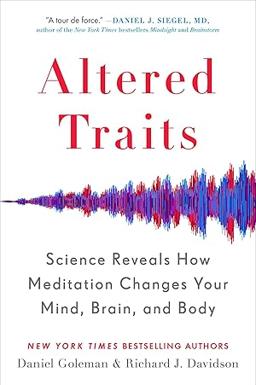
Altered Traits
Daniel Goleman & Richard Davidson
Altered Traits cuts through the noise to examine what meditation research actually shows, separating the well-evidenced effects from the hype, written by two scientists with decades of work between them.
Curious where you actually rank?
Free IQ test · 36 questions · Instant results · No sign-up
Start Free IQ Test →Already know your score? Convert it to a percentile →