
The Theory That Changed Classrooms
In 1983, Harvard psychologist Howard Gardner published "Frames of Mind," proposing that human intelligence is not a single general capacity but a collection of at least seven (later expanded to eight or nine) distinct intelligences: linguistic, logical-mathematical, spatial, musical, bodily-kinaesthetic, interpersonal, intrapersonal, naturalistic, and (tentatively) existential.
The educational implications were immediate and appealing. If children had different intelligence profiles rather than different amounts of a single intelligence, then teaching to different strengths made obvious sense. The theory spread rapidly into schools worldwide, generating curricula, assessment tools, and teaching frameworks designed around the multiple intelligences framework.
The scientific response from cognitive researchers was considerably cooler.
What Gardner Got Right
Gardner's core intuition, that standard IQ tests only measure some types of cognitive ability, is actually correct and not controversial among researchers. The leading scientific model of intelligence (Cattell-Horn-Carroll) recognises multiple distinct abilities: fluid reasoning, crystallised knowledge, processing speed, working memory, spatial reasoning, and others. Gardner wasn't wrong to point this out.
Gardner's observation that schools in the 1980s were too narrowly focused on linguistic and logical-mathematical abilities at the expense of other genuine capabilities was also broadly right. The educational advocacy that emerged from his theory had real value in broadening what schools treated as worth developing.
0.40–0.70
Typical positive intercorrelation between Gardner's "distinct" intelligences when measured, the opposite of what the theory predicts
The Core Scientific Problem
The central problem with Gardner's theory is empirical: the proposed intelligences are not statistically independent. When researchers measure performance on tasks representing different Gardner intelligences, they consistently find positive correlations, sometimes strong ones. People who score well on linguistic tasks tend to score somewhat better on logical-mathematical tasks, spatial tasks, and so on.
This intercorrelation is precisely what the g-factor, general intelligence, was discovered to represent in the first place. Spearman's original observation in 1904 that cognitive abilities positively correlate with each other led to the concept of g. Gardner's theory predicts this should not happen, that musical intelligence should be largely independent of linguistic intelligence, for example. The data consistently say otherwise.
Gardner's criteria for designating something an "intelligence", including having a distinct developmental history, existing in special populations (savants, prodigies), and having a plausible evolutionary basis, are not the same criteria that psychologists use to establish that a factor is genuinely distinct from others. The methodology was argumentative rather than statistical, it didn't use the kind of data analysis that would be needed to prove the intelligences are truly separate.
Discover Your IQ Score
Free 36-question assessment. Instant results. No sign-up required.
Take the Free IQ Test →Gardner's Own Response
Gardner has consistently acknowledged that his theory has not been empirically validated in the standard scientific sense, but argues that this is not the right standard to apply to it. He describes multiple intelligences as a "scientific hypothesis" that is useful for educational practice regardless of its precise empirical status. Critics find this unsatisfying: a claim about how the mind is structured should be subject to empirical test, and a theory specifically designed to be immune from falsification is not doing the work of science.
Gardner has also pushed back on critics by questioning whether the g-factor itself is what it is claimed to be, noting that a positive correlation matrix could arise from a common cause (like general health or motivation) without implying a specific intelligence factor. This is a legitimate methodological point that psychometricians take seriously, though it does not rescue the independent-modules claim at the center of his theory.
The Learning Styles Confusion
Gardner's theory became entangled with, and partly responsible for, the "learning styles" movement, which proposed that students learn best when taught in their preferred modality (visual, auditory, kinaesthetic). Gardner himself disavowed this connection, noting that multiple intelligences and learning styles are different claims.
The learning styles literature has been extensively reviewed and found not to hold up: matching teaching to a student's self-reported preferred style does not improve learning outcomes relative to teaching the same content to all students in the most effective way for that content. This finding has been replicated repeatedly, but the belief persists in education.
The Fair Assessment
Multiple intelligences theory is an inspiring educational philosophy with weak empirical support as a scientific theory of intelligence. This is not a binary failure, it is a common situation where a framework is more useful as a heuristic than as a literal scientific claim.
The practical takeaway for education is genuine: broaden what you treat as worth developing. Spatial reasoning, musical skill, interpersonal ability, and bodily competence are all real human capacities that matter for life outcomes. Schools that nurture only verbal and mathematical ability are leaving genuine human potential on the table.
The practical takeaway for understanding intelligence is more limited: Gardner's multiple intelligences are not independent modules with separate neural substrates. They are real cognitive domains that correlate positively with each other, consistent with both g theory and the broader CHC model. A person's general intelligence is a meaningful predictor of their performance across most of them.

AJ Dorey
Founder, IQScore
AJ Dorey is an English software developer who researches and writes about intelligence and cognition. He built IQScore because most online IQ tests are broken — they either inflate scores to keep people happy or bury results behind a paywall after 20 minutes of questions.
Further Reading
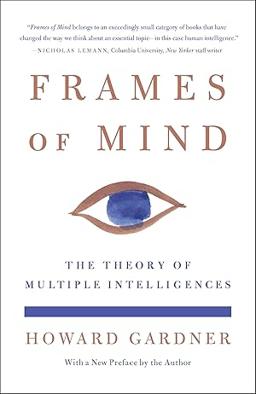
Frames of Mind: The Theory of Multiple Intelligences
Howard Gardner
Frames of Mind is Gardner's original 1983 book, if you want to understand the full argument directly from the source, without the simplifications that come with every summary, this is where it starts.
Curious where you actually rank?
Free IQ test · 36 questions · Instant results · No sign-up
Start Free IQ Test →Already know your score? Convert it to a percentile →