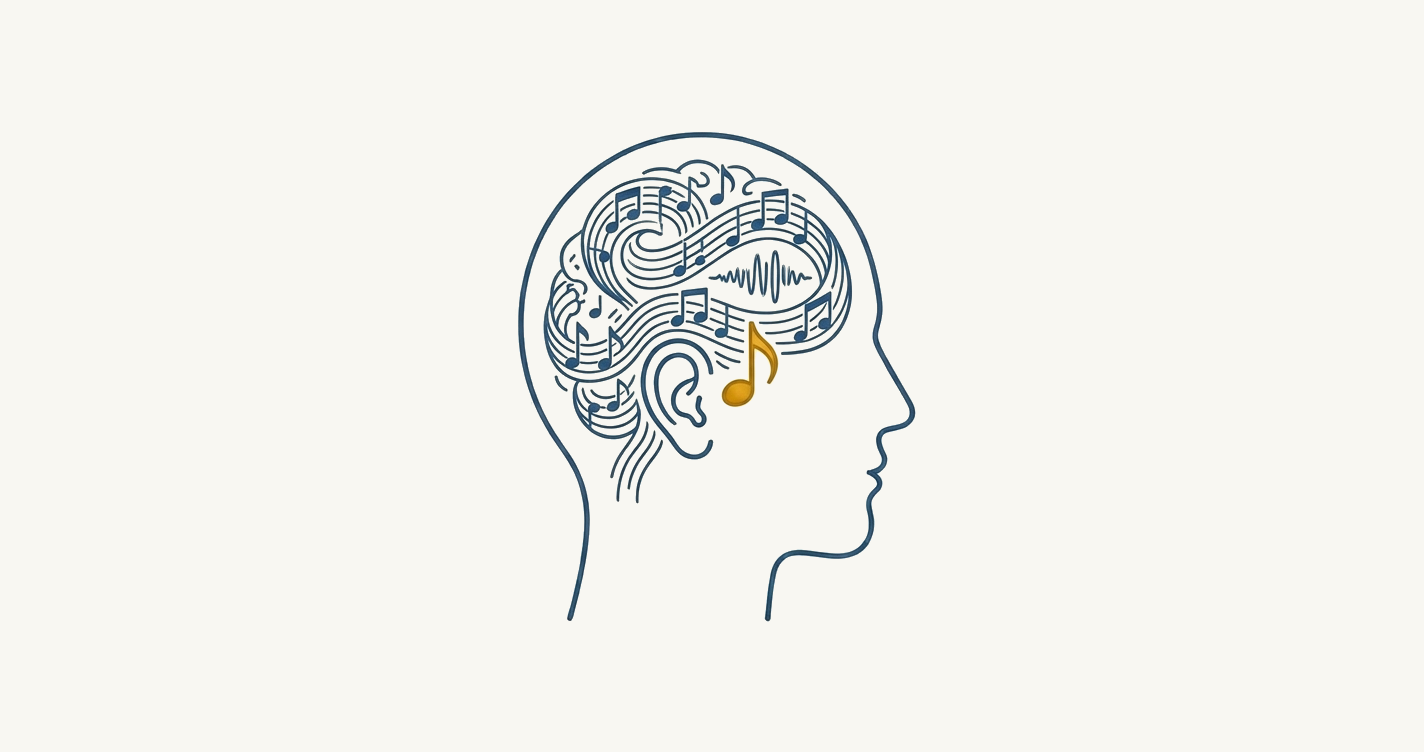
The Mozart Effect: What the Research Found
In 1993, Rauscher, Shaw, and Ky published a study in Nature reporting that college students scored higher on a spatial reasoning test immediately after listening to 10 minutes of Mozart compared to silence or relaxation instructions. The effect was real, the study was legitimate, and the media transformation that followed was one of the most spectacular distortions of scientific findings in modern memory.
The Mozart Effect became: "listening to classical music makes babies smarter." Parents played Mozart to infants, pregnant women played it to foetuses, the state of Georgia considered allocating funds for classical music CDs for newborns. None of this was supported by the original research, which showed a small, temporary spatial reasoning improvement in adults that the authors themselves never claimed was general intelligence enhancement.
By the late 2000s, comprehensive meta-analyses had confirmed that the original specific effect was real but fragile, small (effect size d ≈ 0.14–0.18), and likely explained by arousal and mood effects rather than anything music-specific. Playing an audio book or watching a comedy clip had similar effects.
d=0.14
Effect size of the Mozart Effect on spatial reasoning, smaller than the effect of mood induction generally
What About Active Music Training?
The Mozart Effect story obscured a more genuinely interesting question: does actively learning to play music affect cognitive development? This is a different claim, and the evidence is considerably more supportive.
Learning an instrument is cognitively demanding in multiple ways simultaneously. It requires fine motor coordination, reading symbolic notation, translating visual input into physical action, auditory feedback integration, and sustained attention, often all at once. That sustained, multi-domain cognitive demand is qualitatively different from passive listening.
Discover Your IQ Score
Free 36-question assessment. Instant results. No sign-up required.
Take the Free IQ Test →What the Training Evidence Shows
Research on music training and cognition has produced three relatively well-supported findings:
Phonological processing and reading. Music training, particularly in early childhood, is consistently associated with stronger phonological awareness, the ability to perceive and manipulate the sound structure of language. Since phonological processing underlies reading ability, musically trained children tend to show stronger reading outcomes. The causal mechanism (shared neural substrate between music and speech processing) is biologically plausible and partially confirmed by neuroimaging.
Auditory attention and working memory. Musicians show enhanced auditory attention and working memory on laboratory tasks. Whether this is a training effect or a selection effect (people with stronger working memory choose to continue music training) remains debated, but longitudinal intervention studies in children suggest a genuine training component.
Structural brain differences. Long-term musicians show measurable differences in auditory cortex volume, corpus callosum thickness, and motor cortex organisation. These are likely training-driven, they appear proportional to years of training and practice hours, rather than purely selection effects.
The Specific Effect on Language
The most consistently replicated positive finding from music training research is the phonological processing effect. This is less glamorous than "music makes you smarter" but more scientifically solid. Phonological awareness, the ability to recognise and manipulate the sound structure of words, independent of their meaning, is the foundational skill underlying reading. Children who struggle to segment words into phonemes, or to recognise that "cat" and "bat" rhyme, are at elevated risk for reading difficulties.
Music training consistently improves phonological awareness, and the mechanism is biologically coherent: music and speech share neural processing infrastructure in the auditory cortex. The auditory brainstem responds more precisely to speech sounds in trained musicians, a difference measurable in milliseconds of neural timing. Nina Kraus at Northwestern University has published extensively on this, showing that musicians show superior subcortical encoding of speech sounds, particularly in noisy environments. This is probably why musically trained children tend to perform better on reading assessments and why music-based interventions show real benefits for children with dyslexia.
The Selection Problem
Almost all research on music training faces the same methodological challenge: the people who sustain music training for years tend to differ from non-musicians in multiple ways beyond musical exposure. They come from higher-SES families on average, receive more academic enrichment, and likely have higher baseline cognitive ability. Controlling for all these variables is extremely difficult.
The strongest causal evidence comes from randomised controlled trials assigning children to music training versus other activities (visual arts, drama) rather than simply comparing musicians to non-musicians. These studies tend to find smaller benefits than the correlational literature, but the benefits in phonological processing and reading persist even in the controlled designs, which gives the mechanism more credibility than most "makes you smarter" claims can sustain.
The Bottom Line
Listening to Mozart will not raise your IQ. Learning to play an instrument competently likely produces modest real cognitive benefits, particularly in phonological and auditory processing. More importantly, active musical engagement is intrinsically cognitively demanding in ways that passive consumption is not, and that sustained engagement with a complex, multi-domain skill is genuinely good for the brain, whatever the specific mechanism.

AJ Dorey
Founder, IQScore
AJ Dorey is an English software developer who researches and writes about intelligence and cognition. He built IQScore because most online IQ tests are broken — they either inflate scores to keep people happy or bury results behind a paywall after 20 minutes of questions.
Further Reading
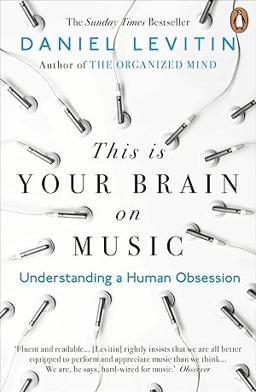
This Is Your Brain on Music
Daniel Levitin
This Is Your Brain on Music, written by a neuroscientist and former record producer, is the most readable account of what music actually does inside the brain. Fascinating whether or not you play an instrument.
Curious where you actually rank?
Free IQ test · 36 questions · Instant results · No sign-up
Start Free IQ Test →Already know your score? Convert it to a percentile →