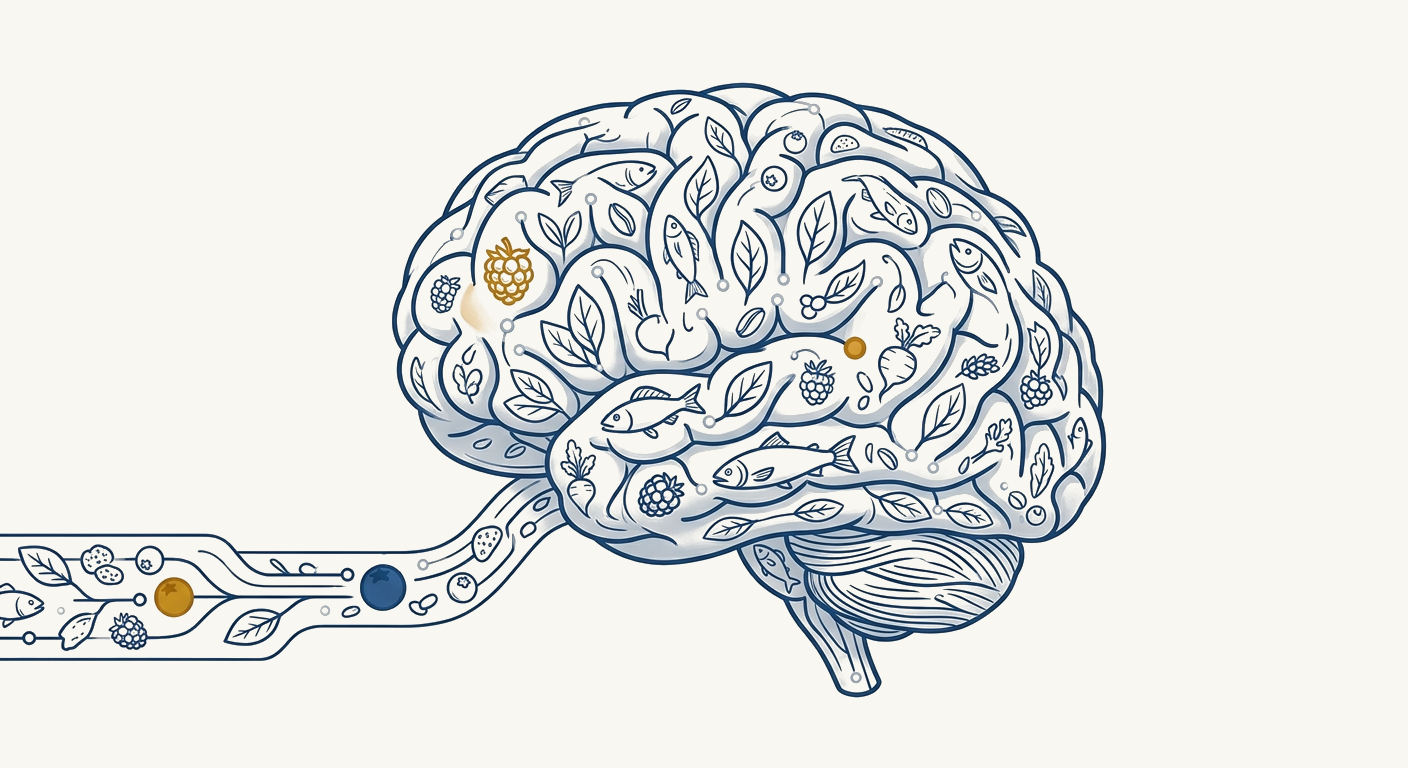
The Brain as a Metabolic Organ
The human brain accounts for roughly 2% of body mass but consumes approximately 20% of the body's resting energy. It is metabolically expensive, highly active at rest, and critically dependent on a continuous supply of glucose and micronutrients to maintain performance. This is not a metaphor, the cognitive effects of acute nutritional changes are measurable, and the effects of chronic dietary patterns on brain structure and function are well-documented.
The challenge is separating the genuine nutritional science from the supplement marketing that has colonised the "brain food" category. Both exist, often in the same article. The goal here is to focus on what the evidence actually supports.
Glucose and Cognitive Function
The brain's preferred fuel is glucose. Cognitive performance is sensitive to blood glucose levels within the normal range, not just at the extremes of hypoglycemia. Studies consistently show that tasks requiring sustained attention, working memory, and executive function are impaired when blood glucose is below optimal, and that a modest glucose load restores performance.
The practical implication is not to eat constantly, but to not attempt cognitively demanding work in a significantly depleted state. Testing or high-stakes cognitive work while fasted for many hours, or immediately after heavy physical exertion, is likely to produce below-optimal performance.
Omega-3 Fatty Acids: The Strongest Nutritional Evidence
Of all nutritional factors linked to brain function, omega-3 fatty acids, particularly DHA (docosahexaenoic acid) and EPA (eicosapentaenoic acid), have the strongest and most consistent evidence base. DHA is a major structural component of neuronal membranes, particularly in the prefrontal cortex and retina. Adequate DHA is essential for membrane fluidity and synaptic transmission efficiency.
The evidence is strongest for:
- Developmental outcomes: maternal omega-3 status during pregnancy is associated with better cognitive and language development in children
- Age-related cognitive decline: higher omega-3 intake is associated with slower cognitive aging and reduced dementia risk
- Depression and mood: EPA in particular has well-documented effects on depressive symptoms, which in turn affect cognitive performance
For healthy adults in midlife, the evidence for acute performance enhancement from omega-3 supplementation is modest but present. The structural importance of DHA to brain function makes adequate dietary intake, from oily fish, walnuts, or supplementation, genuinely important for long-term cognitive health.
Discover Your IQ Score
Free 36-question assessment. Instant results. No sign-up required.
Take the Free IQ Test →B Vitamins and Homocysteine
B vitamins, particularly B6, B9 (folate), and B12, are involved in the metabolism of homocysteine, an amino acid that at elevated levels is neurotoxic and associated with accelerated brain atrophy and cognitive decline. Deficiency in any of these B vitamins can raise homocysteine, and supplementation in deficient individuals measurably reduces it.
B12 deficiency specifically causes neurological symptoms including memory problems, cognitive slowing, and mood changes, and is common in older adults and people following vegan diets who do not supplement. This is not a subtle effect: frank B12 deficiency produces clinically significant cognitive impairment that is reversible with supplementation.
Iodine and Iron: The Most Consequential Deficiencies
Iodine deficiency is the most preventable cause of cognitive impairment worldwide. The World Health Organization estimates that 1.9 billion people have insufficient iodine, and even mild iodine deficiency during pregnancy and early childhood reduces IQ by an estimated 10 to 15 points per individual. The introduction of iodized salt in the 20th century is one of the contributors researchers point to in explaining part of the Flynn Effect, population-wide IQ gains that followed improved nutrition. The consequences of severe iodine deficiency (cretinism) are irreversible; mild deficiency causes cognitive deficits that are also difficult to reverse after the critical developmental window.
Iron deficiency is comparably significant, particularly in children and women of reproductive age. Iron is essential for myelin formation, dopamine synthesis, and the development of the prefrontal cortex. Iron deficiency anemia in children under two is associated with measurable IQ deficits and long-term cognitive differences, some of which persist even after the deficiency is corrected. This affects roughly two billion people globally, making it the most common nutrient deficiency. For cognitive health specifically, iron status during early development and in school-age children is arguably more consequential than any supplement an adult might take.
What the Evidence Does Not Support
The supplement industry has produced a vast catalogue of cognitive performance claims that substantially outrun the evidence. Some specific cases:
- Ginkgo biloba: meta-analyses have consistently failed to find cognitive benefits beyond placebo in healthy adults
- "Nootropic" blends: most proprietary blends contain doses too small to produce the effects shown in the individual ingredient studies they cite
- High-dose antioxidants: vitamin E and C supplementation at high doses has not shown consistent cognitive benefits and may interfere with exercise adaptation
The Practical Bottom Line
The clearest dietary interventions for cognitive performance are:
- Avoid chronic nutritional deficiencies, particularly B12, vitamin D, iron, and omega-3 in populations at risk
- Follow a Mediterranean-style dietary pattern, the most consistently supported whole-diet pattern for cognitive health, emphasising oily fish, vegetables, olive oil, nuts, and limited processed food
- Manage blood glucose stability, for acute cognitive performance, avoid extreme glycaemic dips during cognitively demanding tasks
- Be sceptical of supplements, focus on whole food sources of nutrients, and supplement only for documented deficiencies
Food affects cognition. The effects are real, cumulative, and increasingly well-understood. The gap is between what the evidence supports and what the supplement market claims, and that gap is very large.

AJ Dorey
Founder, IQScore
AJ Dorey is an English software developer who researches and writes about intelligence and cognition. He built IQScore because most online IQ tests are broken — they either inflate scores to keep people happy or bury results behind a paywall after 20 minutes of questions.
Further Reading
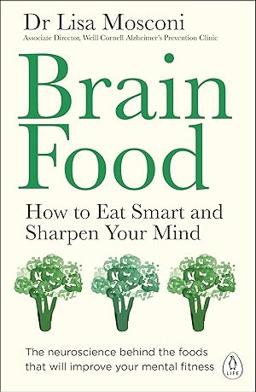
Brain Food: The Surprising Science of Eating for Cognitive Power
Lisa Mosconi
Brain Food, written by a neuroscientist who specialises in how diet affects the brain, goes well beyond general nutrition advice into what specific foods actually do to cognitive function and long-term brain structure.
Curious where you actually rank?
Free IQ test · 36 questions · Instant results · No sign-up
Start Free IQ Test →Already know your score? Convert it to a percentile →