
The Chicken-and-Egg Problem
The correlation between education and IQ is well-established and substantial, people with more years of schooling score higher on intelligence tests. But the causal direction has long been contested: does education increase intelligence, or do smarter people simply stay in school longer?
This question has been extremely difficult to answer with standard observational data, because education and IQ are confounded by dozens of other factors, family socioeconomic status, parental education, neighbourhood resources, and health, that affect both. To establish causality, researchers needed designs that created random or as-if-random variation in education levels.
What Natural Experiments Show
Over the past two decades, a series of natural experiments, policy changes that altered school leaving ages, compulsory education laws, and schooling disruptions, have provided cleaner evidence. The consistent finding is that additional years of education do causally increase IQ test scores.
The most comprehensive meta-analysis on this question, by Ritchie and Tucker-Drob (2018), analysed data from over 600,000 participants across multiple natural experiment designs. Their estimate: each additional year of education increases IQ by approximately 1–5 IQ points, with a best estimate of around 3–4 points.
The natural experiment designs are worth understanding, because they make the causal case more persuasive than any correlation study can. Researchers have exploited changes in compulsory schooling laws, when governments raised the minimum school leaving age from 14 to 15, for example, children born just after the cutoff completed one more year of education than children born just before it, with no other systematic differences between groups. Those extra-educated groups consistently score higher on cognitive tests taken decades later. Norwegian, Swedish, and British data all converge on this pattern. The COVID-19 school closures of 2020–21 provided an unintentional large-scale version of the same experiment: where closures were longest, cognitive assessment scores dropped measurably, with the effects concentrated in numeracy and literacy, the domains most directly trained by school.
What Education Does to Cognition
Education appears to affect IQ through multiple mechanisms:
Crystallised intelligence accumulation. The most obvious mechanism: school teaches vocabulary, reasoning frameworks, mathematical concepts, and general knowledge that directly affect performance on IQ test components measuring crystallised intelligence. Verbal comprehension and applied knowledge subtests are particularly sensitive to educational input.
Fluid intelligence protection and development. Less obviously, education also appears to affect fluid intelligence, non-verbal reasoning and abstract problem-solving. The mechanism is likely that schools provide sustained practice in exactly the kind of systematic, structured problem-solving that fluid intelligence tasks demand. Following a proof, solving a multi-step word problem, or constructing a reasoned argument all exercise the working memory and executive attention components that underlie fluid reasoning.
Metacognitive strategy development. Schools teach students how to approach problems, to decompose, to check work, to use systematic strategies. These metacognitive skills affect performance on novel reasoning tasks beyond any specific knowledge they provide.
Discover Your IQ Score
Free 36-question assessment. Instant results. No sign-up required.
Take the Free IQ Test →Early Childhood: Where Education Effects Are Largest
The most dramatic education-IQ effects appear at the earliest ages. Studies of early childhood intervention programmes, particularly the Perry Preschool Project and the Abecedarian Project in the US, found IQ gains of 5–10 points in children who received high-quality early education compared to controls, with effects persisting into adulthood. These programmes involved intensive structured learning in the ages from 0–5, when neural plasticity is highest and environmental input has the strongest effects on cognitive development.
The policy implication has been debated because some early IQ gains "fade out" by age 8–10, children who had high-quality early education don't necessarily maintain the IQ advantage permanently. But long-term follow-up studies found lasting advantages in educational attainment, earnings, and health that appeared even after the IQ gap had narrowed. The mechanism is probably that early education builds habits and schemas that improve learning efficiency, even when the IQ metric itself converges back toward baseline.
The Summer Learning Loss Effect
Perhaps the most striking evidence for education's causal role in maintaining IQ comes from studies of "summer learning loss", the documented decline in cognitive test performance over summer breaks when schooling is interrupted. Children, on average, return to school in autumn performing slightly below where they left off in spring. The effect is larger for children from lower socioeconomic backgrounds.
This finding suggests that formal education is not just a vehicle for accumulating knowledge but an active maintenance environment for the cognitive capacities IQ tests measure. Without regular structured cognitive engagement, performance drifts downward.
The Broader Implication
The education–IQ relationship has implications beyond schooling. If formal education increases IQ by providing structured cognitive engagement, deliberate cognitive engagement in adulthood, through complex work, continued learning, demanding hobbies, and substantive reading, may provide similar maintenance. The evidence here is less clean than for formal education, but the direction is consistent: cognitive ability is not fixed by your early twenties; it responds to what you do with your mind throughout your life.

AJ Dorey
Founder, IQScore
AJ Dorey is an English software developer who researches and writes about intelligence and cognition. He built IQScore because most online IQ tests are broken — they either inflate scores to keep people happy or bury results behind a paywall after 20 minutes of questions.
Further Reading
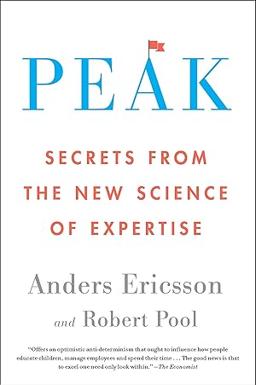
Peak: Secrets from the New Science of Expertise
Anders Ericsson
Peak is the definitive research on how expertise is actually developed, challenging the idea that ability is fixed and showing how deliberate, structured practice reshapes cognitive performance over time.
Curious where you actually rank?
Free IQ test · 36 questions · Instant results · No sign-up
Start Free IQ Test →Already know your score? Convert it to a percentile →