The Question That Generates More Heat Than Light
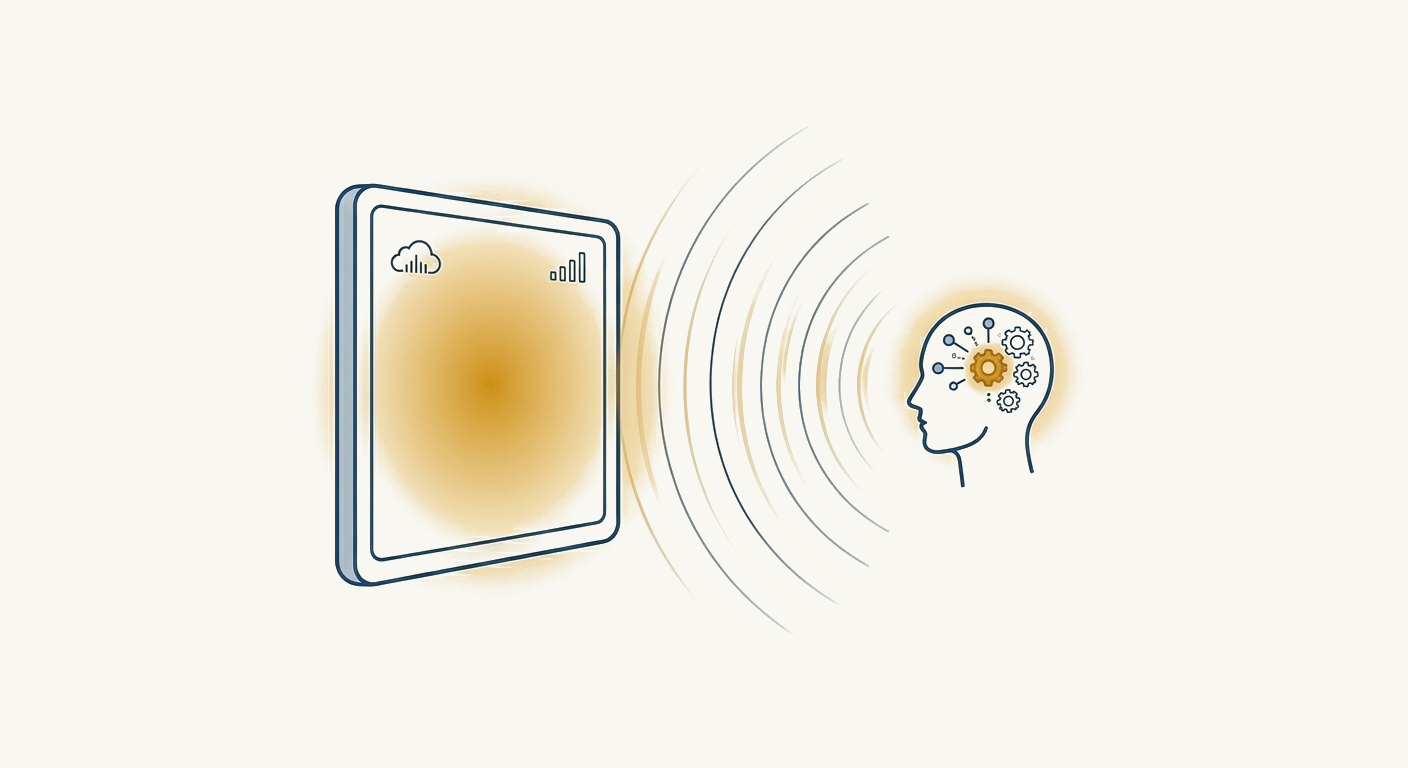
Few topics in developmental cognitive science generate as much parental anxiety, media coverage, and policy debate as screen time. And few topics have such a wide gap between the certainty of public discourse and the actual state of the scientific evidence.
The honest position: screens are not uniformly harmful, not uniformly beneficial, and the effects vary substantially depending on content type, context, age, and what screen time displaces. Flat-rate screen time guidelines, "no more than X hours per day", are a blunt instrument for a complex phenomenon.
What the Evidence Measures
Most large-scale studies of screen time and cognitive development measure correlations between parental-report screen time and cognitive outcomes, controlling imperfectly for confounds. The methodological problems are substantial: parents who report more screen time tend to differ from parents who report less in multiple ways (socioeconomic status, parental education, parenting style, household stability) that also predict cognitive outcomes. Disentangling these factors requires either better measurement or randomised experiments that are difficult to run ethically.
r≈-0.15
Typical correlation between recreational screen time and academic outcomes in children, negative but small, and largely attenuated by confounders
The 2012 Shift
Psychologist Jean Twenge at San Diego State University documented an unusual inflection point in teen mental health data around 2012, the year smartphone ownership crossed 50% among US adults and social media became near-universal in adolescents. Depression, anxiety, loneliness, and self-harm rates in teenagers, particularly girls, shifted noticeably around that time after years of relative stability. Twenge attributes much of this to social media and smartphone use; critics note that 2012 also coincides with other societal shifts (post-2008 economic recovery, changing teen employment patterns) that complicate the causal attribution. The correlation is real and striking; the mechanism is debated. But the temporal pattern has motivated considerably more rigorous research than the older screen time literature.
What Is Reasonably Well-Supported
For very young children (under 2), passive video is largely ineffective for learning. Young children do not transfer learning from screens to the real world, called the "video deficit effect", except when a live interactive video call is involved. The American Academy of Pediatrics' caution about screens for children under 18 months has reasonable empirical backing for this specific claim.
High-quality, interactive, educational content can support development. Programmes like Sesame Street have decades of evidence for positive effects on pre-literacy and numeracy skills in preschoolers. Educational apps with active engagement (rather than passive viewing) show better learning outcomes than passive content. Content quality matters more than screen time duration.
Social media use in adolescents is associated with worse mental health outcomes. This is one of the more consistent findings, particularly for adolescent girls. The mechanism is debated (social comparison, sleep displacement, cyberbullying, or reduced in-person social interaction), but the association between heavy social media use and depression, anxiety, and reduced wellbeing is replicable across multiple large datasets.
Discover Your IQ Score
Free 36-question assessment. Instant results. No sign-up required.
Take the Free IQ Test →The Displacement Hypothesis
The strongest framework for understanding screen time effects is not direct cognitive harm but displacement. Screen time that replaces sleep, physical activity, in-person social interaction, and reading has measurable negative cognitive effects, through the degradation of those activities rather than through any direct harm from the screen itself.
A child who reads for an hour is doing something cognitively developmental; a child who watches passive video instead is not. The harm is the lost reading opportunity rather than the video's inherent toxicity. This distinction matters because it points toward what parents should actually manage: total sleep, physical activity, reading habits, and in-person socialisation, with screen time as one factor affecting each.
What the Nuanced Evidence Suggests for Practice
- Prioritise content quality over time duration, interactive, educational, or narrative content is better than passive entertainment
- Protect sleep above all else, evening screens that delay sleep onset are the most clearly harmful use pattern
- Active screens (creating, coding, communicating) are cognitively different from passive consumption; treating them identically misses important distinctions
- Co-viewing and discussion substantially improve learning outcomes from screen content for young children
- The most harmful pattern in adolescents is heavy social media displacement of sleep and in-person relationships
The Bottom Line
Screen time is not a cognitive toxin administered in hourly doses. It is a category of activity that can be educationally valuable or cognitively inert depending on content, context, and what it displaces. Managing screen time well means managing those specific variables, not enforcing an arbitrary daily ceiling that treats watching a documentary, video-calling a grandparent, and endlessly scrolling short-form video as equivalent activities.

AJ Dorey
Founder, IQScore
AJ Dorey is an English software developer who researches and writes about intelligence and cognition. He built IQScore because most online IQ tests are broken — they either inflate scores to keep people happy or bury results behind a paywall after 20 minutes of questions.
Further Reading
The Shallows: What the Internet Is Doing to Our Brains
Nicholas Carr
The Shallows examines precisely what heavy internet use does to how we read, remember, and think, and how it rewires attention at a structural level. A Pulitzer Prize finalist and still the most rigorous book on the subject.
Curious where you actually rank?
Free IQ test · 36 questions · Instant results · No sign-up
Start Free IQ Test →Already know your score? Convert it to a percentile →