Beyond the Stereotypes
The cultural conversation about video games and cognitive performance has long been dominated by two opposing camps: concerned parents and regulators pointing to addiction and attention problems, and enthusiastic gamers citing cognitive benefits. The scientific literature is more nuanced than either narrative.
What research actually shows is that different game genres have measurably different cognitive effects, some positive effects are robust and well-replicated, and the concern about negative effects is largely concentrated in specific contexts (excessive play displacing sleep or exercise) rather than inherent to gaming itself.
Action Video Games: The Best-Studied Case
Action video games (first-person shooters, action platformers, real-time strategy games) are the most extensively studied genre, primarily because researchers at the University of Rochester (Bavelier, Green, and colleagues) identified and replicated a specific benefit: action game players show enhanced performance on visual attention tasks, particularly tracking multiple objects in a cluttered visual field, detecting targets in peripheral vision, and processing information from briefly displayed scenes.
The effect sizes are substantial (0.5–1.0 SD in some experiments), and transfer extends to untrained visual tasks more than most cognitive training does. The mechanism is plausible: action games require exactly these visual processing skills on a second-by-second basis.
Discover Your IQ Score
Free 36-question assessment. Instant results. No sign-up required.
Take the Free IQ Test →Spatial Cognition Benefits
Multiple studies have found that playing video games, particularly 3D navigation and exploration games, is associated with better spatial reasoning and larger hippocampal volume in experienced players. A notable study from University College London found that players of open-world navigation games showed hippocampal engagement and spatial memory formation consistent with active wayfinding.
Strategy games and puzzle games show more modest cognitive effects, primarily in planning and executive function tasks, though the evidence base is smaller than for action games.
Real-World Applications of Gaming Cognitive Benefits
The visual attention benefits of action games have found practical applications in medical training. Laparoscopic surgeons who were experienced gamers made fewer errors and completed procedures faster in simulation studies. The University of Toronto used action game training as a surgical skills intervention, with measurable results. Pilots and air traffic controllers show similar visual attention profiles to experienced gamers. These are not just laboratory effects; the specific attention and spatial processing demands of action games appear to transfer to real professional tasks requiring the same capabilities.
Not all games should be credited with these benefits. Passive or highly repetitive mobile games (endless runners, match-three puzzles) appear to produce minimal cognitive transfer. The Bavelier group found that the key variable was games requiring rapid, unpredictable, multi-target tracking in three-dimensional space, not simply any game involving "thinking." Casual games marketed for their cognitive benefits typically lack these features.
What About Attention Problems?
The concern that gaming causes ADHD or attention dysregulation is not well-supported by causal evidence. Children with attention difficulties are drawn to gaming, it provides the high-frequency reward feedback that helps with sustained engagement. This creates a correlation between gaming and attention problems that does not establish causality in either direction.
The clearer concern is gaming's displacement effects: when gaming displaces sleep, physical activity, or social interaction, the downstream cognitive effects of those losses are real and meaningful. The harm in those cases is not the gaming itself but what it crowds out.
Who Actually Benefits, and Who Does Not
Most gaming research is conducted on adults aged 18 to 30, a demographic whose brains are already past the critical developmental windows that matter most for cognitive architecture. What holds for a 22-year-old may not hold the same way for a 12-year-old or a 55-year-old. The limited research on children and adolescents suggests that heavy action gaming in early adolescence may sharpen visual attention but the developmental tradeoffs are less well understood than in adults. The research on older adults is more promising: moderate gaming in people over 60 has shown genuine benefits in processing speed and spatial working memory, populations where those capacities tend to decline.
Individual differences in response to gaming are also larger than the averages suggest. Some people show strong transfer from action game training to real-world attention tasks; others show minimal transfer. The reasons are not fully understood, but baseline cognitive profile, play style, and how much the player is genuinely challenged (rather than grinding familiar content) all appear to matter. One honest caveat: a meaningful portion of the positive gaming cognition research has not replicated cleanly across independent labs. The direction of the effect is fairly consistent; the size and durability are less settled than some popular summaries imply.
The Nuanced Bottom Line
Video games are not cognitively neutral, they produce real, specific cognitive changes in the people who play them. For action and 3D games, some of those changes are positive and well-documented. The cultural panic about gaming as uniformly cognitively harmful is not supported by the evidence.
The relevant questions for any individual are: which specific games, how much time, and what is being displaced? A moderate amount of gaming that does not crowd out sleep, exercise, or substantive real-world engagement is unlikely to be cognitively harmful and may produce specific benefits in visual attention and spatial cognition. Gaming as a primary daily activity that displaces sleep and physical movement is harmful, but through those displacement pathways, not through any direct cognitive toxicity.

AJ Dorey
Founder, IQScore
AJ Dorey is an English software developer who researches and writes about intelligence and cognition. He built IQScore because most online IQ tests are broken — they either inflate scores to keep people happy or bury results behind a paywall after 20 minutes of questions.
Further Reading
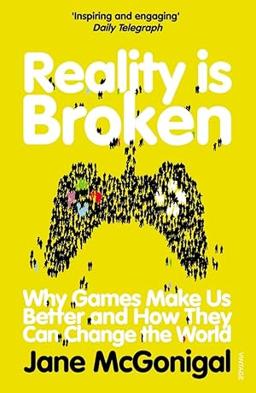
Reality Is Broken
Jane McGonigal
Reality Is Broken makes the positive case for games, what they do to motivation, problem-solving, and collaboration. Whether or not you agree with the argument, it's a compelling read that changes how you think about gaming.
Curious where you actually rank?
Free IQ test · 36 questions · Instant results · No sign-up
Start Free IQ Test →Already know your score? Convert it to a percentile →