The Cognitive Clock Speed
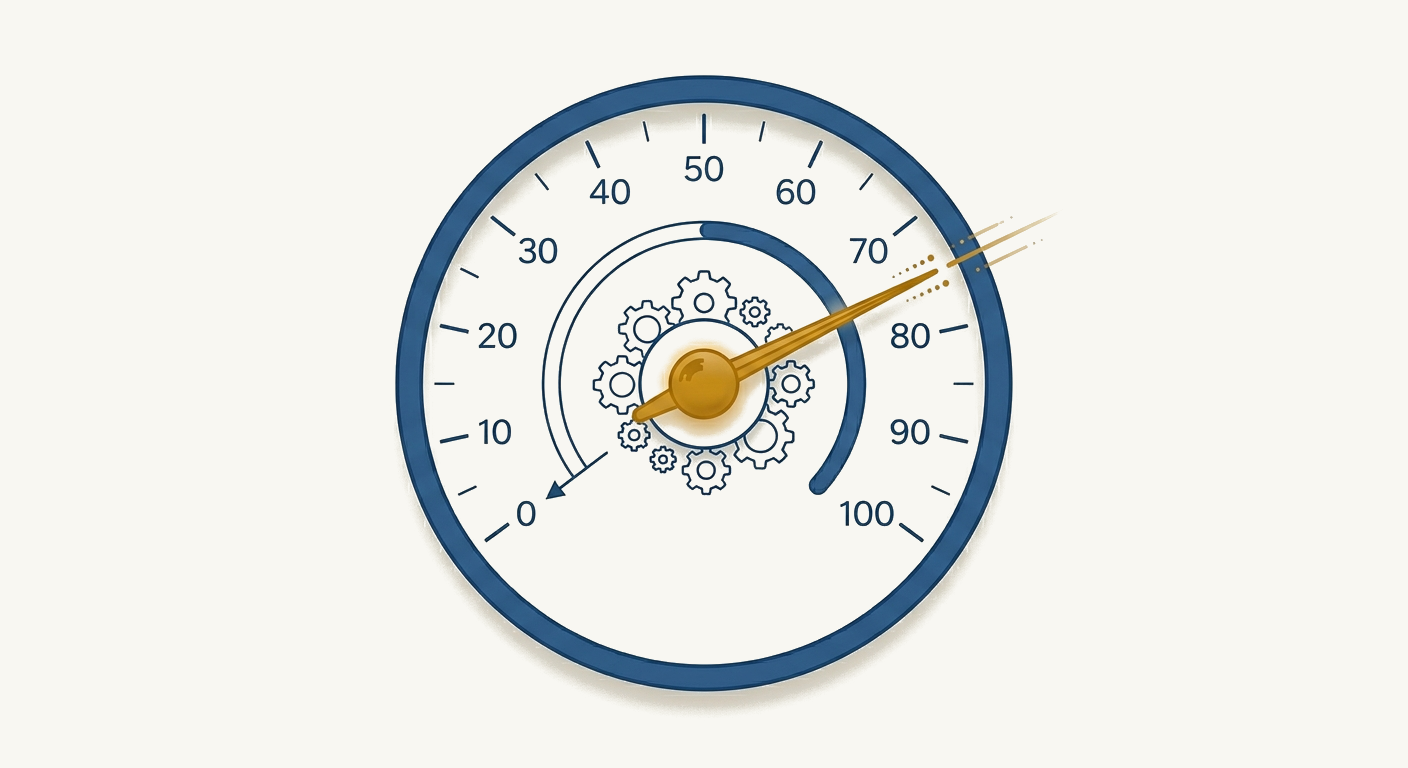
If fluid intelligence is the brain's problem-solving software, processing speed is its clock speed, the rate at which the underlying hardware executes operations. Processing speed determines how quickly you can take in information, perceive it accurately, and produce an appropriate response. It is not about how smart you are in the deep sense; it is about how fast your cognitive machinery runs at any given moment.
Processing speed is measured on most major IQ batteries (including the WAIS processing speed index) through tasks like symbol substitution, scanning rows for matching symbols, and digit-symbol coding. These tasks have minimal reasoning demands, a 10-year-old can do them, but require fast, accurate visual perception and motor response.
Why It Matters More Than It Sounds
Processing speed matters beyond its direct measurement because it sets an upper bound on what other cognitive functions can achieve in real time. Consider working memory: you can only hold information in working memory while you are actively processing it. If processing is slow, information decays before it can be integrated. Faster processing allows more information to be held active simultaneously, supporting more complex real-time reasoning.
This is why processing speed correlates substantially with general intelligence (r ≈ 0.40–0.50) despite involving tasks that seem trivially simple. The simple tasks are measuring something genuinely important about how the broader cognitive system operates.
~1% / year
Approximate rate of processing speed decline after age 25 in healthy adults, the steepest age-related decline of any major cognitive factor
The Biological Substrate: White Matter and Myelin
Processing speed is faster when neural signals travel more efficiently between brain regions. The speed of that transmission depends largely on myelin, the fatty sheath surrounding axons that accelerates electrical conduction. More myelin means faster signal propagation; degraded myelin means slower, less reliable transmission. White matter, which is largely composed of myelinated axons, peaks in volume in the late twenties and early thirties. After that, myelin integrity begins declining, a process that accelerates in the sixties and beyond. This is the primary biological reason processing speed declines earlier and more steeply than other cognitive abilities: it tracks directly onto the physical condition of white matter in ways that reasoning abilities, which draw on more distributed networks, do not.
The Age Sensitivity
Of all cognitive abilities, processing speed shows the earliest and steepest age-related decline. It begins declining in the mid-twenties, earlier than fluid intelligence, working memory, or crystallised intelligence, and continues at approximately 1% per year through midlife, accelerating further in older adulthood.
By age 60, the average healthy adult shows processing speed performance approximately 30–40% slower than their peak in young adulthood. This is not a sign of pathology; it is normal aging. The cognitive compensation that allows most people to function well despite this decline reflects the contribution of crystallised intelligence, expertise, and strategic processing, doing more with each operation even if operations take slightly longer.
What Slows Processing Speed (Acutely)
Processing speed is acutely sensitive to a range of factors that temporarily degrade it beyond baseline:
- Sleep deprivation, one of the most potent acute impairments; even partial sleep restriction dramatically slows reaction times and symbol-substitution performance
- Alcohol, impairs processing speed at doses well below those producing obvious behavioural intoxication
- Anxiety and stress, high arousal narrows attentional focus and can paradoxically slow processing on simple tasks
- Illness and fever, systemic inflammation directly slows neural processing
- Dehydration, even mild dehydration (1–2% body weight) measurably reduces processing speed
Discover Your IQ Score
Free 36-question assessment. Instant results. No sign-up required.
Take the Free IQ Test →What Can Preserve or Improve It
Unlike crystallised intelligence, which continues growing with learning, processing speed cannot be substantially increased in healthy adults beyond its biological ceiling. What can be achieved:
- Aerobic exercise, one of the best-supported interventions for maintaining processing speed, likely through cerebrovascular and neuroinflammatory mechanisms
- Video game training, action video games have replicated evidence for improving visual processing speed on the specific dimensions trained; transfer to general processing speed is limited but detectable
- Sleep optimisation, protecting processing speed from acute impairment is more achievable than raising the baseline
- Cardiovascular health, hypertension, diabetes, and other conditions affecting cerebrovascular health accelerate processing speed decline; treating these protects the trajectory
Interpreting Your Test Profile
On an IQ test with multiple subtests, if your logical reasoning and verbal scores are strong but your processing speed score is notably lower, this typically reflects either normal aging (if you are 40+), an acute state effect (fatigue, stress on test day), or simply a genuine individual difference in this specific cognitive dimension. It does not indicate a cognitive problem, processing speed variation within the average range is common and normal.
Conversely, a high processing speed score with lower reasoning scores suggests a fast cognitive engine running programs that are not yet fully developed, which is common in young adults whose crystallised knowledge base is still growing.

AJ Dorey
Founder, IQScore
AJ Dorey is an English software developer who researches and writes about intelligence and cognition. He built IQScore because most online IQ tests are broken — they either inflate scores to keep people happy or bury results behind a paywall after 20 minutes of questions.
Curious where you actually rank?
Free IQ test · 36 questions · Instant results · No sign-up
Start Free IQ Test →Already know your score? Convert it to a percentile →