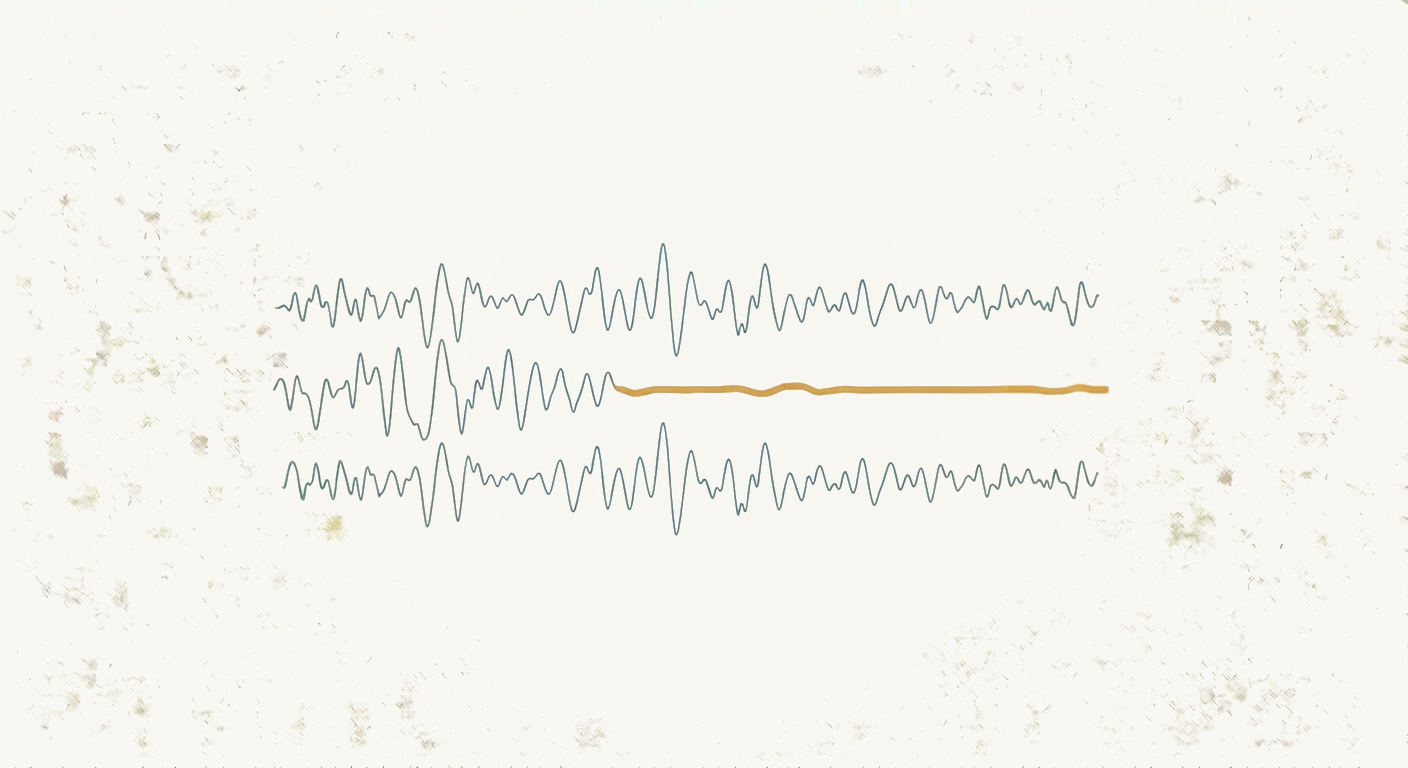
One Night of Poor Sleep Is Not a Minor Inconvenience
Most people accept occasional poor sleep as a fact of modern life, an inconvenience that a strong coffee can fix. The research paints a significantly less forgiving picture. Sleep deprivation doesn't merely make you feel worse. It measurably reduces the cognitive abilities that IQ tests are designed to measure, and it does so quickly, substantially, and in ways you may not be able to accurately judge from the inside.
A comprehensive meta-analysis by Pilcher and Huffcutt (1996) found that sleep-deprived individuals performed worse on cognitive tasks than 97% of non-sleep-deprived controls. The cognitive domains hit hardest, working memory, processing speed, and abstract reasoning, are the same ones that IQ tests specifically target.
~7–8 pts
Estimated IQ-equivalent reduction after a single night of sleep restricted to 5 hours
The Specific Cognitive Costs
Sleep deprivation does not affect all cognitive functions equally. The most vulnerable are:
- Working memory, The ability to hold and manipulate information in mind. Working memory is central to almost every complex reasoning task, and it is among the first things to degrade under sleep restriction.
- Processing speed, Reaction time and the speed at which you can process new information slow measurably after even one shortened night. This affects time-pressured test performance disproportionately.
- Executive function, Planning, inhibition, mental flexibility, and the ability to manage competing demands all depend on the prefrontal cortex, which is exquisitely sensitive to sleep loss.
- Sustained attention, The ability to maintain focus over time. Even moderate sleep restriction causes lapses in sustained attention that compound over the duration of a test.
What makes this particularly insidious is that sleep-deprived individuals are notoriously poor at judging their own impairment. Studies show that after several nights of restricted sleep, people rate their own performance as adequate even as objective measures continue to deteriorate. The reason isn't denial, it's that the prefrontal cortex, which is responsible for accurate self-monitoring and metacognition, is exactly the region most degraded by sleep loss. The very system you'd use to notice the impairment is impaired.
Discover Your IQ Score
Free 36-question assessment. Instant results. No sign-up required.
Take the Free IQ Test →What Happens in the Brain During Sleep
Sleep serves multiple critical functions for cognitive performance. During slow-wave (deep) sleep, the hippocampus replays and consolidates memories acquired during waking hours, transferring them to long-term cortical storage. During REM sleep, the brain integrates new information with existing knowledge, a process closely linked to insight and creative problem-solving.
A discovery from the last decade, the glymphatic system, has added another dimension. During sleep, cerebrospinal fluid pulses through the brain's interstitial spaces, clearing metabolic waste products including amyloid-beta, a protein associated with cognitive decline. This clearance process is dramatically reduced during wakefulness. Chronic sleep restriction means chronic accumulation of metabolic waste in brain tissue.
Chronic Sleep Debt: The Invisible Impairment
Most research focuses on acute total sleep deprivation. Chronic partial restriction, consistently getting 6 hours instead of 8, is actually the more common and arguably more dangerous pattern. Studies by Van Dongen and colleagues (2003) showed that after two weeks of sleeping 6 hours per night, cognitive performance was as impaired as after 24 hours of total sleep deprivation, but subjects reported feeling only slightly sleepy.
The insidious part: you adapt to feeling that way. You lose the ability to accurately perceive how impaired you are.
Why Caffeine Doesn't Fix It
Adenosine is a byproduct of neural activity that accumulates in the brain throughout waking hours, progressively increasing what sleep researchers call "sleep pressure." Sleep clears it. Caffeine doesn't, it works by blocking adenosine receptors, preventing the signal from landing, while the adenosine itself continues to build. The sleepiness disappears; the underlying cognitive impairment does not.
This is why studies consistently show that caffeinated sleep-deprived people perform better than uncaffeinated sleep-deprived people on simple alertness tasks, but the advantage essentially disappears on complex cognitive measures, working memory, abstract reasoning, novel problem-solving. Caffeine restores the feeling of wakefulness without restoring the underlying neural recovery that sleep provides. For a timed cognitive test, this is the critical distinction: caffeine may help you feel ready, but it will not restore your working memory to its rested baseline.
The Practical Implication for Testing
If you want an accurate measure of your cognitive baseline, sleep matters enormously. A score taken after a poor night will measurably understate your actual ability. The research suggests that optimal cognitive performance requires not just one good night but several consecutive nights of adequate sleep, the brain benefits from accumulated rest, not a single recharge.
If you score lower than expected and you have been sleeping poorly, that is almost certainly a partial explanation, not an excuse.

AJ Dorey
Founder, IQScore
AJ Dorey is an English software developer who researches and writes about intelligence and cognition. He built IQScore because most online IQ tests are broken — they either inflate scores to keep people happy or bury results behind a paywall after 20 minutes of questions.
Further Reading
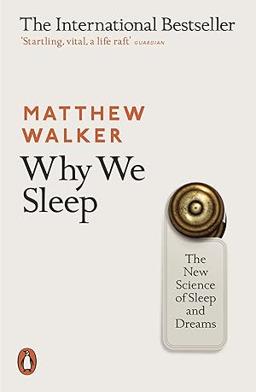
Why We Sleep
Matthew Walker
If this article left you wanting to understand the full picture, Why We Sleep is the definitive read, thorough, accessible, and genuinely eye-opening on what sleep actually does to memory, cognition, and long-term brain health.
Curious where you actually rank?
Free IQ test · 36 questions · Instant results · No sign-up
Start Free IQ Test →Already know your score? Convert it to a percentile →