How Closely Do SAT and IQ Scores Match?
SAT scores and IQ scores correlate at around 0.82, which means they are measuring nearly the same thing. A high SAT almost always means a high IQ estimate, and vice versa. They are not identical tests, but they are close enough that researchers regularly use SAT data as an IQ proxy when studying university populations.
The key difference is this: the SAT tests specific school subjects (algebra, grammar, reading). IQ tests are designed to measure raw reasoning ability regardless of what you studied. That gap matters when comparing scores.
The Research Behind the Correlation
The most widely cited study is Frey and Detterman (2004), published in Psychological Science. Their findings from a nationally representative sample:
These are strong correlations. For context, the correlation between height and professional basketball performance is approximately r = 0.30. The SAT-IQ relationship is substantially tighter, they are measuring similar underlying cognitive ability.
But here is what that 0.82 figure does not tell you. The 18% of variance the two tests do not share is where the picture gets complicated. Students who score higher on the SAT than their IQ would predict tend to share a profile: strong academic habits, consistent schooling, completed curriculum, deliberate test preparation. Students who score lower on the SAT relative to their IQ often show the opposite, limited access to preparation, gaps in formal instruction, or significant test anxiety. The SAT's knowledge component creates a gap that raw reasoning ability alone cannot fully close.
Discover Your IQ Score
Free 36-question assessment. Instant results. No sign-up required.
Take the Free IQ Test →Key Differences Between SAT and IQ Tests
Content: The SAT tests specific academic content, algebra, grammar, reading comprehension of particular passages. IQ tests are designed to measure reasoning ability more abstractly, with less dependence on schooling. A student who has never studied formal algebra will perform poorly on the SAT math section regardless of their reasoning ability.
Preparability: SAT scores improve significantly with targeted preparation. Studies show 200+ point improvements are achievable with structured practice. IQ scores are far more resistant to coaching, short-term preparation produces minimal gains.
What they predict: Both predict academic performance. The SAT predicts first-year university GPA slightly better than IQ tests, likely because it directly measures academic content knowledge. IQ tests predict a broader range of life outcomes, job performance, income, health behaviours, more robustly than SAT scores alone.
The Coaching Gap, and What It Reveals
The most revealing difference between the two tests is not what they measure. It is how they respond to preparation. SAT prep courses reliably produce meaningful score improvements. Kaplan, Princeton Review, and structured self-study programmes regularly report average gains of 100 to 200 points. The College Board's own data acknowledges that practice produces real improvements. This is not controversial.
IQ coaching produces almost nothing. Short-term test familiarisation produces gains of a few points at most. Genuine, lasting IQ improvements from coaching are not reliably documented in peer-reviewed literature. This is not a quirk or a flaw. It is the whole point. IQ tests are deliberately designed to resist coaching, because what they are trying to measure is supposed to be stable. The fact that the SAT responds to preparation and IQ tests do not is not evidence that one is better or worse. It means they are measuring overlapping but meaningfully different things.
If you have a strong IQ score but a modest SAT score, targeted preparation is a real lever, the reasoning ability is there, the specific knowledge and test strategy may not be. That gap can often be closed in a few months of focused work. The reverse is not true. A strong SAT score from intensive preparation does not mean an IQ test will come back equally high. The underlying reasoning ability either exists or it does not, and no prep course changes that.
SAT Score to IQ Conversion (Approximate)
Using the Frey-Detterman correlation and published norms:
These are approximations. Individual variation around any conversion is substantial, treat them as rough guides, not precise equivalents. To see a full breakdown of what any specific IQ score means, careers, percentile, and notable people, browse all scores from 70 to 160 →
Which Score Should You Actually Trust?
For US university admissions the question is moot, the SAT is what counts, and no admissions office has ever asked for an IQ score. But if the question is which test more accurately measures general cognitive ability, the research gives IQ tests a modest edge. They depend less on specific curriculum, resist coaching far better, and carry over a century of validity data across diverse populations and real-world outcomes.
The SAT's correlation with IQ is high enough, r = 0.82, that it functions as a reasonable proxy. This is why researchers regularly use SAT data when studying cognitive ability in university populations where formal IQ testing was never conducted. It is not a perfect substitute, but it is not a fundamentally different thing either.
The question worth asking is: what does a gap between the two scores actually tell you? A strong IQ with a weak SAT usually points to knowledge gaps or preparation differences, neither of which says anything about raw intelligence. A strong SAT with a lower IQ estimate is the flip side: good preparation, solid academic knowledge, possibly less raw reasoning ability than the score implies. Both patterns are common. The 0.82 correlation is real, but it is not 1.0, and that 18% gap is often where the most useful information sits.

AJ Dorey
Founder, IQScore
AJ Dorey is an English software developer who researches and writes about intelligence and cognition. He built IQScore because most online IQ tests are broken — they either inflate scores to keep people happy or bury results behind a paywall after 20 minutes of questions.
Further Reading
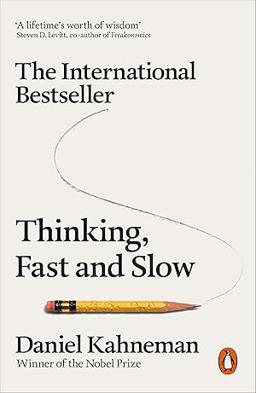
Thinking, Fast and Slow
Daniel Kahneman
Thinking, Fast and Slow is the definitive account of how the two cognitive systems behind IQ tests and academic performance actually work, and where both types of assessment fall short as predictors of real-world judgment.
Curious where you actually rank?
Free IQ test · 36 questions · Instant results · No sign-up
Start Free IQ Test →Already know your score? Convert it to a percentile →