2,647 Completions. Here Is the Update.
In May we published an analysis of 652 IQScore results and said we would revisit the data once the dataset passed 1,000 completions. It passed 1,000 completions three weeks after that article went up. We held off. We wanted more.
We now have 2,647 filtered results. Four times the original sample. The distribution has settled, and most of what we found the first time around has held. One finding has not.
The Headline Numbers
Mean IQ: 104. Median: 109. Lowest score in the dataset: 55. Highest: 139.
The mean-median gap has widened slightly. At 652 completions the mean was 103.1 and the median was 107; both have crept upward since, and the gap between them has held. When the mean sits below the median, the distribution has a longer lower tail pulling the average down, with the bulk of results clustering above it. That is what we see here.
What Does the Score Distribution of Online IQ Test-Takers Look Like?
| IQ Band | % of Completers |
|---|---|
| Under 70 | 2.4% |
| 70–79 | 5.7% |
| 80–89 | 13.2% |
| 90–99 | 12.5% |
| 100–109 | 18.1% |
| 110–119 | 35.1% |
| 120–129 | 11.8% |
| 130+ | 1.3% |
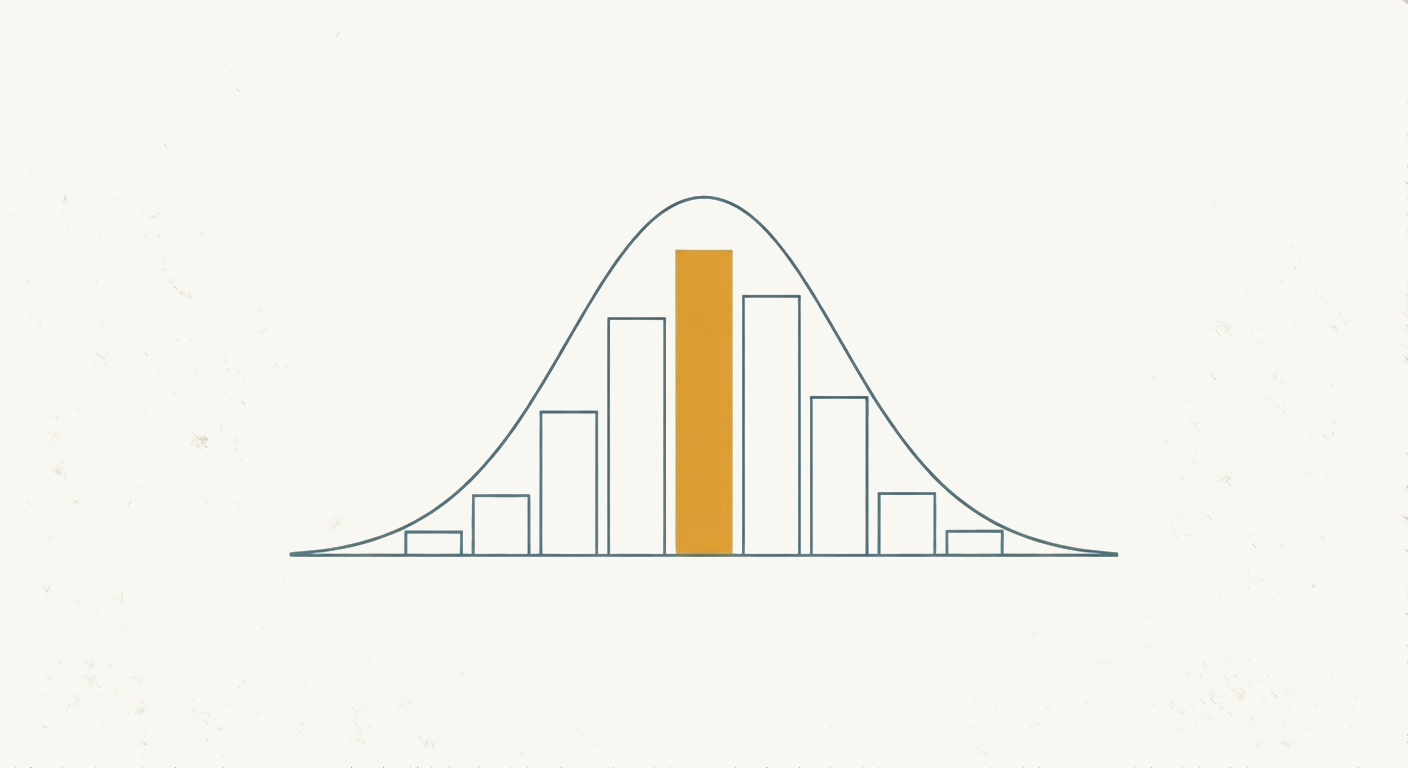
The 110-119 band contains 35.1% of all results. At 652 completions it was 33.0%. In a true normal distribution centred at 100 with SD 15, you would expect roughly 15-16% of results in that range. We are seeing more than double, and the proportion has grown as the dataset scaled rather than flattening toward something more representative. We checked whether organic traffic diversification was starting to pull the curve toward average. It is not moving.
Discover Your IQ Score
Free 36-question assessment. Instant results. No sign-up required.
Take the Free IQ Test →The Finding That Changed
The first analysis identified logical reasoning as the gap domain. It scored 11.8% of maximum available points while the other domains clustered around 27-29%.
Since that article the IQScore assessment was restructured. The current test covers four domains: verbal reasoning, numerical reasoning, logical reasoning, and applied reasoning. Because the structure changed, a direct comparison with the old numbers is not meaningful. What we can report is what the new domain data shows.
Average accuracy across 2,647 completions:
45%
Verbal Reasoning
57%
Numerical Reasoning
61%
Applied Reasoning
63%
Logical Reasoning
We found verbal reasoning to be the clear gap domain, sitting 12 percentage points below numerical and 16-18 points below applied and logical. We checked whether this narrowed among higher scorers. It does not. People in the 120-129 band show the same relative pattern. Verbal underperforms at every level of the distribution.
This surprised us. The previous finding about logical reasoning made intuitive sense. Formal deductive logic is rarely practiced outside academic settings, and dual-process research consistently shows that intuitive thinking generates plausible-but-wrong answers to syllogisms and conditional logic chains. Most people trust that intuition. It costs them points on logic tasks. We had a clean explanation ready.
A verbal reasoning gap is harder to account for with the same framework. Two possibilities are worth considering, and we do not know which explains more of the gap.
The first is that self-selection works differently across domains. People who seek out cognitive performance tests tend to be numerically and analytically oriented. Puzzle games, technical work, pattern tasks. Verbal reasoning as measured by IQ tests covers vocabulary breadth and reading inference, not just everyday communication. That is a different skill set, and it may simply be less practiced by this specific population.
The second explanation is geography. IQScore has users across the world and the test is in English. Non-native English speakers would be expected to show lower verbal accuracy regardless of their overall cognitive ability. We do not have language data to confirm this. It is the explanation we find most plausible, and it is the one we intend to investigate further.
We ran the query multiple times. Verbal at 45% does not move.
What Has Not Changed
The self-selection effect has not shifted as the dataset grew from 652 to 2,647. The above-average median has not shifted. The shape of the distribution has not shifted. Every pattern we reported in the first analysis is holding, and in the case of the 110-119 band, strengthening.
The consistent finding across both analyses is that people who complete an online IQ test are not a random slice of any population. Treating online test results as representative of national or global intelligence distribution would be a significant methodological error. We addressed this directly in our earlier piece on what IQ scores actually mean and it remains true here.
What This Data Still Cannot Tell Us
We do not have demographic data. Age, country, first language, education level are not collected. The verbal finding could be substantially explained by non-native English speakers in the dataset. We cannot confirm or rule that out with what we have.
Retake data is not isolated. Some users complete the test more than once. First attempts are not separated from retakes, which means the dataset may slightly overrepresent higher scores from users who improved on a second go.
These are real limitations and we are flagging them before anyone else does. The sample is large enough to be informative, the patterns are stable across both analyses, and honest caveats are more useful to readers than false confidence.
What We Are Watching Next
The verbal gap. A non-native English speaker effect should show up as the user base diversifies, pulling verbal accuracy toward something more reflective of the actual global language distribution. If that happens we will report it. If the gap stays flat as traffic sources change, the domain-preference explanation gets harder to dismiss.
We will update again at 5,000 completions. By that point the dataset will be large enough to segment meaningfully by score band and look at whether the verbal gap varies by performance level. For context on what the verbal domain actually tests and why it correlates so strongly with general intelligence, our article on pattern recognition and IQ tests covers the reasoning side in detail.
The data is from real people who took a real test. That makes it worth publishing honestly, including the parts we cannot yet fully explain.

AJ Dorey
Founder, IQScore
AJ Dorey is an English software developer who researches and writes about intelligence and cognition. He built IQScore because most online IQ tests are broken — they either inflate scores to keep people happy or bury results behind a paywall after 20 minutes of questions.
Curious where you actually rank?
Free IQ test · 36 questions · Instant results · No sign-up
Start Free IQ Test →Already know your score? Convert it to a percentile →